
PremiumBlock’s New Risk Hub Brings Decentralised Prediction Markets and Web3 Poker
PremiumBlock’s non-custodial leap
PremiumBlock has launched a non-custodial risk hub that combines prediction markets, perpetual futures and Web3 poker in one wallet-based environment. The June 19, 2026 launch positions premiumblock non custodial prediction markets as part of a wider shift toward crypto products where users retain control of collateral rather than depositing funds with a central operator.
The timing is notable. On the same date, reports said WhiteBIT received a MiCA licence from Austria’s Financial Market Authority, giving the industry another signal that regulated crypto services in Europe are entering a more formal phase. For readers following crypto news, the two developments show the market moving in two directions at once: tighter licensing for centralised firms and faster experimentation in non-custodial trading.

What is PremiumBlock’s risk hub?
PremiumBlock’s new platform is designed around a non-custodial wallet model. Instead of transferring assets to an exchange account, users interact through their own wallet, with collateral remaining under user control. According to the Decrypt/Chainwire press release referenced in the launch materials, all trades take place within the user’s wallet environment.
The risk hub brings together three core features. First, it offers prediction markets, where users can take positions on outcomes rather than simply buying or selling tokens such as Bitcoin, Ethereum or USDC. Second, it includes perpetual futures with up to 2.5× leverage, giving it elements of a decentralized perps platform without the same custody setup as a traditional exchange. Third, it introduces Web3 poker, extending the platform from trading into skill-based and outcome-driven crypto gaming.
PremiumBlock also says users can create markets, which is a key distinction from many centralised venues. In a conventional exchange interface, the operator decides which markets are listed and how trading access is structured. In a non-custodial prediction market crypto model, smart contracts and wallet interactions can support more open market formation, although the quality, liquidity and legal status of each market still matter.
The commercial appeal is clear: traders get a single dashboard for prediction exposure, perps and Web3 poker while keeping custody of collateral. The trade-off is equally clear. When a platform avoids custody, the user takes on more responsibility for wallet security, transaction approvals and understanding the mechanics of each market.
Regulatory backdrop: MiCA and WhiteBIT’s licence
Europe’s Markets in Crypto-Assets framework, known as MiCA, is intended to create a common regulatory structure for crypto firms operating across the EU and the wider European Economic Area. It focuses on issues such as licensing, transparency, capital requirements and supervision, with regulators including ESMA involved in the broader framework.
On June 19, 2026, WhiteBIT was reported to have received a MiCA licence from the Austrian Financial Market Authority. The WhiteBIT EU licence allows the exchange to provide regulated services across the EEA, subject to the conditions of the licence and the MiCA regime. That makes WhiteBIT part of a growing group of crypto companies adapting to a more formal European rulebook.
This regulatory track differs sharply from the route taken by PremiumBlock. A regulated centralised exchange may rely on account registration, custody arrangements, compliance checks, monitoring tools and, in some cases, specialist service providers such as custodians or blockchain analytics firms like TRM Labs. A non-custodial platform puts more activity directly on-chain and keeps user funds outside the platform’s custody.
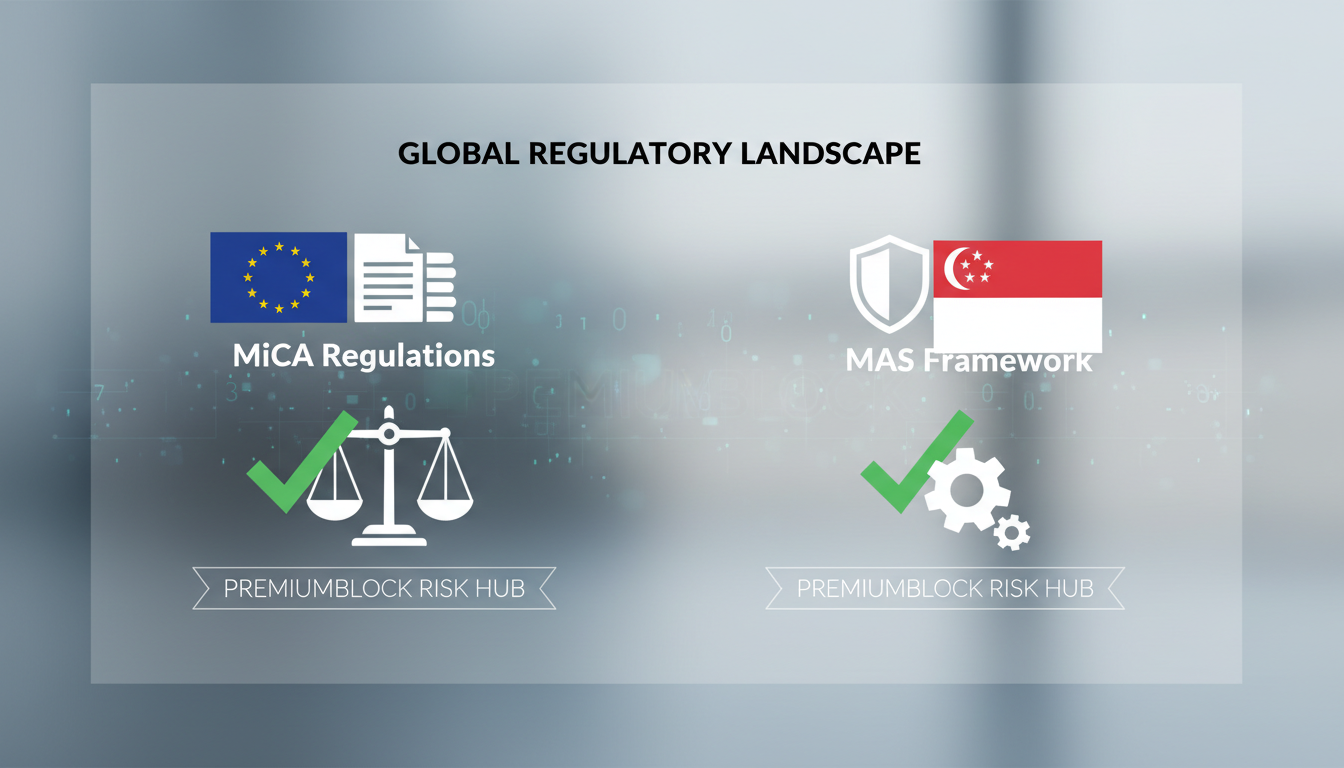
For Singapore readers, the comparison matters because global rules increasingly shape access, product design and risk controls. MiCA is European, but its influence is being watched well beyond the EU. You can follow wider developments in crypto regulation as firms respond to licensing demands in Europe, Singapore and other major markets.
Why non-custodial platforms matter for Singapore
Singapore has one of Asia’s most closely watched crypto markets. The Monetary Authority of Singapore has taken a structured approach to digital asset regulation, and SG crypto regulation remains focused on balancing innovation with consumer protection, financial stability and market integrity.
For Singapore-based traders, the interest in non-custodial crypto trading is not difficult to understand. Exchange failures, withdrawal freezes and uncertainty over offshore platforms have made custody a central concern. A wallet-based service like PremiumBlock speaks to users who want more direct control over collateral while accessing prediction markets, perps and Web3 poker from a single interface.
The appeal may be especially strong among technically confident users who already use DEXs, DeFi wallets or platforms such as Hyperliquid. These users often understand wallet approvals, gas fees, collateral management and the difference between holding assets directly and leaving them on a centralised exchange such as Binance.
That does not mean non-custodial access removes regulatory questions. Singapore users still need to consider local rules, platform availability, gambling restrictions, tax treatment and the legal status of specific products. Web3 poker, in particular, may raise different issues from trading Bitcoin or Ethereum. The practical lesson is simple: control over funds is valuable, but it does not replace legal clarity.
Technology and mechanics explained
A non-custodial platform works more like a self-service trading terminal connected to your wallet than a bank-like exchange account. On a centralised exchange, users typically deposit funds, see balances inside an account dashboard and rely on the operator to manage custody. On a non-custodial system, the wallet remains the centre of the user journey.
For prediction markets, smart contracts can record positions on defined outcomes. A simple analogy is a transparent escrow box: users commit collateral, the contract tracks who is on each side of the market, and settlement depends on the result. Oracles are the tools that bring outside information into the blockchain environment, such as whether an event occurred or which outcome was valid.
Perpetual futures work differently. A perp lets traders gain long or short exposure without owning the underlying asset directly and without a fixed expiry date. PremiumBlock’s launch materials refer to leverage of up to 2.5×, meaning a trader can take exposure larger than their collateral. That can magnify gains, but it can also accelerate losses.
The non-custodial design changes the risk profile. Users are not handing assets to a central operator, yet they are still exposed to smart-contract bugs, oracle failures, poor liquidity and mistaken wallet approvals. Educational resources such as trading guides can help users understand margin, liquidation and collateral before using any decentralized perps platform.
PremiumBlock’s combination of prediction markets, perps and Web3 poker also shows how DeFi interfaces are becoming broader. Instead of separate apps for trading, betting-style markets and games, a risk hub can bring multiple products into one wallet-connected environment. The convenience is attractive, but it makes product comprehension even more important.
Impact on investors, traders and crypto companies
For investors and active traders, PremiumBlock adds another example of the market’s move beyond simple spot trading. Prediction market crypto products give users a way to express views on events, while perps provide directional exposure to price movements. Web3 poker brings a different form of risk, closer to gaming than financial trading.
The benefits are strongest for users who value control, wallet-based access and composability. SG traders who already manage their own assets may prefer not to depend on a centralised account balance. A non-custodial structure can also reduce certain custody risks, since the platform does not hold user funds in the same way as a traditional exchange.
The drawbacks should not be understated. Centralised exchanges can offer customer support, fiat rails, compliance infrastructure and familiar account recovery processes. A DeFi-style interface usually gives users more control but less protection from their own mistakes. Losing a private key, approving a malicious contract or misunderstanding leverage can be costly.
For crypto companies, the split between WhiteBIT and PremiumBlock is a useful market signal. WhiteBIT’s MiCA licence points toward regulated expansion, formal oversight and cross-border compliance in Europe. PremiumBlock points toward product experimentation, wallet-native access and decentralised market creation. Both models may coexist, but they serve different user expectations.
Established exchanges may respond by improving non-custodial tools, offering more transparent custody, or building hybrid services that combine licensed operations with wallet-based functionality. The direction is not settled. What is clear is that users are becoming more sensitive to who controls their assets and how each platform manages risk.
Risks and limitations
Non-custodial does not mean risk-free. PremiumBlock may reduce custody dependence, but users still face legal, technical and market risks. MiCA offers a European framework for licensed crypto firms, while MAS rules apply in Singapore. A platform’s structure, product type and user location can all affect the regulatory analysis.
Smart-contract vulnerabilities remain a core concern. If contract code fails or an oracle reports an incorrect result, users may have limited practical recourse. Prediction markets can also be vulnerable to thin liquidity, unclear event definitions or manipulation attempts, especially where niche markets are created by users.
Leverage adds another layer of risk. Even 2.5× exposure can produce rapid losses in volatile crypto markets. Web3 poker and similar products may raise separate legal and responsible-gaming issues. Decentralised betting or gaming platforms should not be treated as equivalent to licensed exchanges, regulated brokers or approved gambling operators.
What’s next for prediction markets and crypto regulation?
PremiumBlock’s launch highlights a growing demand for non-custodial tools that combine prediction markets, perpetual futures and Web3 poker. WhiteBIT’s MiCA licence, announced in the same news cycle, shows the opposite but equally important trend: crypto firms are facing more formal licensing expectations in major jurisdictions.
For Singapore readers, the key question is not whether DeFi or CeFi “wins”. It is how each model handles custody, transparency, access, compliance and user protection. Anyone comparing wallet-native services with regulated exchanges should review platform mechanics carefully and consider alternatives through resources such as best crypto platforms.
PremiumBlock may appeal to users who want direct control and broader on-chain risk markets. That control comes with responsibility. The future of prediction markets will likely depend as much on regulation, liquidity and trust as on interface design.
FAQ
How is a non-custodial prediction market different from a centralised exchange?
Is PremiumBlock available in Singapore?
What does MiCA mean for Asian traders?
Are Web3 poker games legal in SG?
How do I protect myself when using a DeFi platform?
Risk note: Crypto markets are volatile, regulatory environments differ across jurisdictions, and non-custodial platforms may involve smart-contract, liquidity and legal risks. This article is for informational purposes only and is not financial, investment or legal advice. Always do your own research and consult qualified professionals before investing or trading.


