
Canada Leads Crypto ETF Innovation: First Solana and XRP Spot Funds with Staking
Canada Leads Crypto ETF Innovation: First Solana and XRP Spot Funds with Staking is more than a headline—it reflects a meaningful shift in how digital assets are packaged for mainstream investors. In 2025, Canadian ETF issuers introduced North America’s first regulated spot Solana and XRP funds, expanding the market beyond Bitcoin and Ether. What makes this development especially notable is that these products are not limited to simple price exposure. At least in Solana’s case, they also integrate staking, creating the potential for additional yield within a familiar, exchange-traded structure.
That combination matters. For years, investors interested in altcoins often had to choose between direct token ownership on crypto platforms and indirect exposure through less precise instruments. Canada’s latest ETF launches show that regulated markets are now catching up to demand for broader crypto access. With physically backed structures, custodial safeguards, and eligibility for standard brokerage accounts, these funds represent a new frontier in digital asset investing—one that could influence regulators and product sponsors far beyond Canada.
How crypto ETFs work and why investors care
A crypto ETF is an exchange-traded fund designed to give investors exposure to digital assets through a regulated, exchange-listed vehicle. Instead of opening a crypto wallet, managing private keys, or trading directly on a digital asset platform, an investor can buy and sell ETF units in the same way they would trade a stock or a traditional commodity fund. That simplicity is a large part of the appeal.
Not all crypto ETFs are built the same way. The structure matters because it affects tracking, risk, custody, and how closely the ETF reflects the underlying asset.
Physically backed, derivative-based, and hybrid ETF structures
Physically backed crypto ETFs hold the underlying cryptocurrency directly. In a spot Solana ETF or spot XRP ETF, the fund acquires and stores actual SOL or XRP on behalf of investors. This structure is often preferred by investors who want cleaner exposure to the asset’s market price, without the roll costs or contract complexity associated with futures.
Derivative-based crypto ETFs do not necessarily hold the coins themselves. Instead, they may use futures contracts or other financial instruments tied to the asset’s price. This can be useful in markets where spot products are not yet permitted, but the trade-off is that performance can diverge from the spot market over time.
Hybrid structures combine elements of both approaches. A hybrid crypto ETF might hold some spot assets while also using derivatives for liquidity management, exposure adjustments, or operational flexibility. These structures can be more complex, but they may offer sponsors additional tools for portfolio management.
For most investors, the key advantage of an ETF is accessibility. A regulated fund removes much of the technical friction that comes with direct ownership of crypto. There is no need to manage a seed phrase, move assets between wallets, or navigate the operational differences among exchanges. The investor simply uses a brokerage account.
That convenience also intersects with compliance and investor protection. ETF issuers work within a recognized regulatory framework, rely on regulated service providers, and generally disclose holdings, fees, and fund mechanics through prospectus documents. In the Canadian market, this has helped build confidence in digital asset products among both retail and institutional participants.
Another reason crypto ETFs matter is tax and account flexibility. In Canada, certain ETFs can be held in registered accounts such as RRSPs and TFSAs, depending on the product and the investor’s circumstances. For long-term investors, that can make a meaningful difference compared with holding tokens directly through a crypto platform where tax reporting and account treatment may be less straightforward.
Risk management is another important feature. Physically backed crypto ETFs typically rely on professional custodians and institutional-grade storage arrangements, including cold storage. That does not remove market risk, but it can reduce some of the operational and security risks associated with self-custody. For investors who want exposure to digital assets without becoming their own custodian, that is a compelling benefit.
The latest Canadian launches matter because they take these ETF advantages and extend them into altcoins. Bitcoin and Ether opened the door, but Solana and XRP suggest the market is moving into a more mature phase—one where investors can seek diversified crypto exposure in a structure they already understand.
Why staking changes the ETF model
Staking is a process through which certain cryptocurrencies are committed to help secure and operate a blockchain network. In return, participants may receive rewards, often paid in the same asset. It is common on proof-of-stake networks, where validators and delegators help maintain network integrity instead of relying on proof-of-work mining.
In direct crypto ownership, staking typically requires an investor to hold the asset, understand the mechanics of the network, choose a staking method, and accept the operational terms involved. These can include validator selection, lock-up periods, reward schedules, and network-specific risks. For many mainstream investors, that is a barrier.
Bringing staking into an ETF changes the experience significantly. Instead of managing tokens directly, the investor owns units of a fund that handles the operational side. The ETF sponsor and its service providers oversee custody, staking arrangements, reporting, and administration. The result is a product that can potentially provide two sources of value:
- Exposure to the price movement of the underlying crypto asset
- Additional yield generated through staking rewards
This dual benefit is a major innovation in the regulated fund space. A spot ETF already simplifies access to crypto. A staking-enabled ETF goes further by incorporating a native economic feature of the blockchain into the fund wrapper. That can improve the product’s appeal for investors who view staking rewards as an important part of the total return profile of proof-of-stake assets.
Canada has already played a pioneering role here. 3iQ helped establish the model with its Ether Staking ETF in 2023, showing that staking could be integrated into a listed investment vehicle. It continued that approach with the Solana Staking ETF, reinforcing the idea that regulated crypto funds do not have to be passive holding vehicles alone—they can also reflect how these networks function economically.
Of course, staking inside an ETF also raises practical considerations. Rewards are not guaranteed. Network rules can change. Some proof-of-stake systems involve lock-up mechanics or delays in unstaking. There are also event risks such as slashing, where staked assets may be penalized under certain conditions tied to validator behavior. Even so, the ETF wrapper can make these complexities more manageable by centralizing administration under a professional manager.
For investors comparing direct ownership with a staking ETF, the choice often comes down to convenience, custody preferences, and account type. Direct staking may offer more control, but the ETF route can be simpler, more familiar, and easier to fit into a diversified portfolio. In that sense, staking-enabled ETFs represent an important bridge between crypto-native functionality and traditional capital markets.

Why Canada moved ahead of other markets
Canada’s leadership in crypto ETFs did not appear overnight. It reflects years of regulatory openness toward physically backed digital asset funds, along with a capital markets ecosystem willing to support innovation. Long before Solana and XRP products arrived, Canada had already shown a greater willingness than many peers to approve exchange-traded funds holding actual crypto assets.
In 2021, Canada launched the world’s first Bitcoin and Ether ETFs. That was a landmark moment for the global digital asset industry. It demonstrated that a regulated market could allow spot crypto exposure in an exchange-traded structure while still relying on recognized custody, valuation, and disclosure standards. Once those products were established, the path toward broader crypto ETF offerings became more realistic.
The regulatory climate also helped attract sponsors with experience in digital assets and thematic investing. Firms such as Purpose, CI Galaxy, Fidelity, and 3iQ all found room to build crypto ETF strategies in Canada. That competition mattered. It encouraged product development, fee pressure, and experimentation with structures that went beyond first-generation Bitcoin and Ether funds.
Another factor is practical market infrastructure. For a spot crypto ETF to function, an issuer needs more than regulatory approval. It also needs institutional custodians, market makers, pricing benchmarks, legal clarity, and exchange support. Canada developed enough of that infrastructure early, which gave sponsors confidence that these products could operate at scale within a transparent framework.
The presence of physically backed ETF structures was especially important. In jurisdictions where regulators remained hesitant about spot crypto exposure, sponsors often had to rely on futures-based or otherwise indirect products. Canada’s readiness to permit funds holding actual crypto provided a cleaner route to asset-specific ETFs, including altcoins once the market matured enough to support them.
This broader pattern helps explain why Canada could move into Solana and XRP before the United States approved similar products. Canadian regulators had already established a track record with digital asset ETFs and allowed the market to evolve incrementally. Instead of treating each new crypto product as a completely novel category, the system had a framework that could be extended.
That does not mean approvals were automatic or risk-free. Altcoins bring additional complexity, including different network designs, liquidity profiles, and legal considerations. But Canada’s approach suggests that regulators were willing to assess those products within a working structure rather than delay them indefinitely.
For investors, this leadership has practical consequences. Canada is not just home to early crypto ETFs—it is increasingly a testing ground for what regulated digital asset investing may look like next. If Solana staking ETFs and XRP spot ETFs perform well operationally, they may become templates for future funds tied to other sectors of the crypto market.
In that sense, Canada’s role is larger than its domestic market size. It is acting as a proving ground. Product issuers, institutional allocators, and regulators elsewhere are all likely watching how these altcoin ETFs trade, gather assets, disclose risks, and integrate blockchain-specific features such as staking. That observational value alone gives Canada an outsized influence in the next stage of ETF development.
The 3iQ Solana Staking ETF and 3iQ XRP ETF
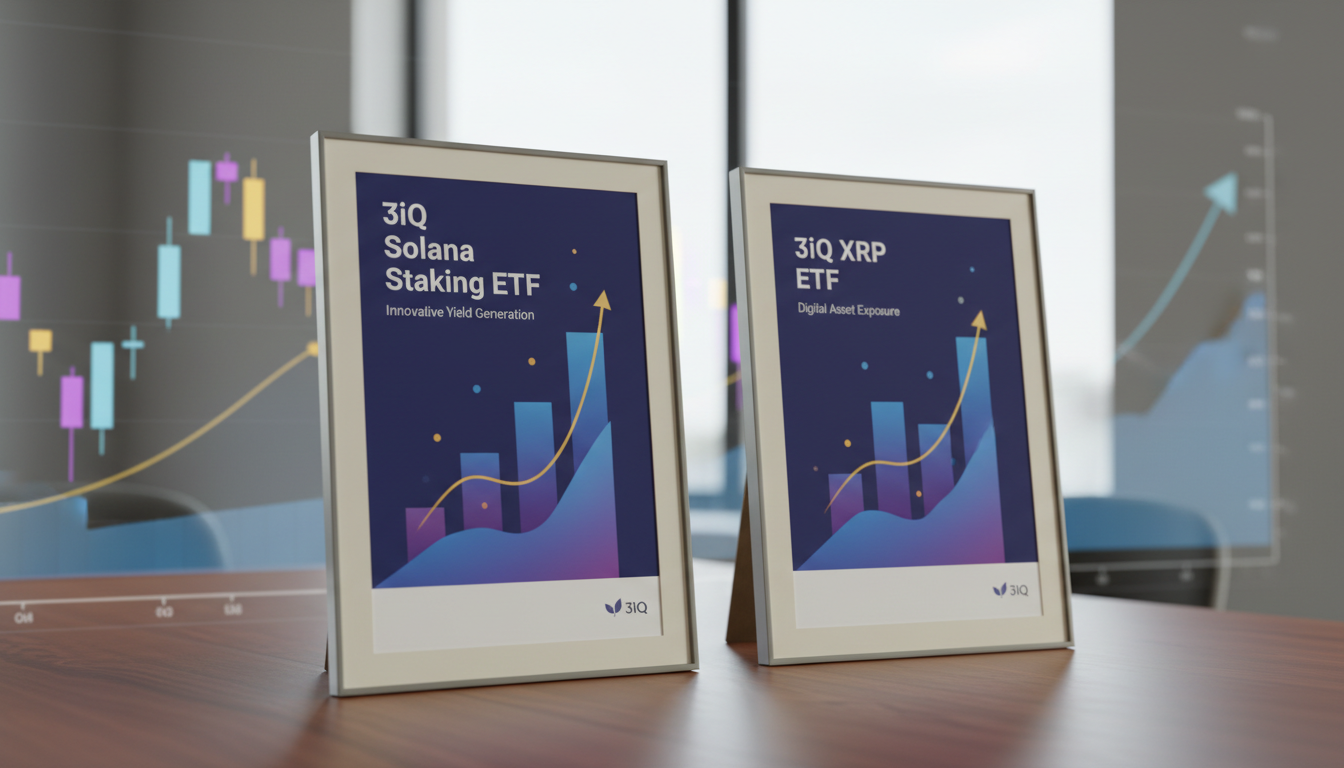
The clearest evidence of Canada’s leadership came in 2025, when 3iQ launched products tied to two of the market’s most closely watched altcoins: Solana and XRP. Although both are exchange-traded vehicles offering regulated access to crypto, their structures and investment appeal reflect different market dynamics.
3iQ Solana Staking ETF (TSX: SOLQ)
In April 2025, 3iQ launched the Solana Staking ETF, trading on the Toronto Stock Exchange under the ticker SOLQ. According to the brief, this was the first North American spot Solana ETF. The fund invests in long-term holdings of SOL and distributes the economic benefit of staking rewards to investors, combining direct spot exposure with on-chain yield generation in a listed fund format.
That structure is important because Solana is a proof-of-stake network, and staking is central to how the ecosystem functions. By including staking at the fund level, SOLQ does more than mirror the token’s market price. It seeks to capture part of the network’s native return mechanism, giving investors a more complete version of Solana exposure than a non-staking vehicle would provide.
3iQ also made the launch commercially attractive by setting a 0% management fee for the first 12 months. After that initial period, the fund’s ongoing fee was positioned at a low 0.15%, making it highly competitive within the digital asset ETF space. Fee design matters in crypto investing, where high volatility can already amplify the impact of costs over time.
Institutional interest added another layer of credibility. The brief notes that major investors such as SkyBridge Capital backed the fund. That support signaled that the Solana ETF was not simply a retail novelty. It also suggested that sophisticated market participants saw demand for regulated access to SOL through a listed product rather than direct token handling.
Why Solana? The network has become one of the most discussed alternative blockchain ecosystems thanks to its high throughput, active developer community, and growing footprint in decentralized finance and NFTs. Investors drawn to Solana often view it as a network built for scale, with a strong focus on speed and transaction efficiency. Those characteristics made it a logical candidate for a spot ETF once the market was ready to move beyond Bitcoin and Ether.
Solana’s appeal also fits ETF logic well. It has enough name recognition to attract mainstream curiosity, but it still sits outside the core BTC/ETH allocation many investors already understand. A Solana ETF therefore offers a way to diversify crypto exposure while staying inside a regulated wrapper.
The table below summarizes the most important features of the two products discussed in this article.
| ETF | Launch timing | Main exposure | Staking feature | Introductory fee | Ongoing fee noted in brief |
|---|---|---|---|---|---|
| 3iQ Solana Staking ETF (TSX: SOLQ) | April 2025 | Spot SOL holdings | Yes | 0% for first 12 months | 0.15% |
| 3iQ XRP ETF | June 2025 | Spot XRP holdings | Not specified in brief | 0% for first 6 months | 0.59% |
This comparison highlights why the Solana product attracted attention: it blended a first-to-market position with staking functionality and an aggressive fee strategy.
3iQ XRP ETF
In June 2025, 3iQ launched North America’s first XRP ETF, another sign that Canada was willing to extend regulated crypto ETF access beyond the largest digital assets. The fund tracks the CME CF XRP-Dollar Reference Rate and holds XRP in cold storage, reinforcing the fund’s physically backed, professionally custodied structure.
The XRP ETF also used promotional pricing to attract early inflows. It charged zero management fees for the first six months, after which the fee shifted to 0.59%. While that post-promotion fee is higher than the Solana ETF’s stated ongoing cost, it still gave investors a regulated route into XRP exposure at a time when product access elsewhere remained limited.
XRP’s path to ETF readiness was shaped heavily by legal and regulatory context. The brief points to legal clarity on XRP’s status and pent-up investor demand as key drivers behind the launch. That makes sense. XRP has long been one of the most recognized digital assets globally, but its market narrative has also been shaped by legal uncertainty. Once conditions improved, the argument for a listed product became far stronger.
Unlike Solana, XRP is not generally associated with staking in the same way, so the core investment case for the ETF centers on streamlined spot exposure rather than a combined price-and-yield proposition. Even so, the product serves a similar strategic purpose in the market: it brings a widely followed altcoin into a transparent ETF format that can be bought through mainstream brokerages.
Both launches illustrate an important point. Canada’s crypto ETF market is no longer confined to first-generation digital assets. It is beginning to support more specialized products tailored to the economic and legal characteristics of specific tokens. That is a sign of maturation.
Why these altcoin ETFs matter for investors and the broader market
The significance of Canada’s Solana and XRP ETF launches goes beyond first-mover prestige. For investors, these funds solve a practical problem: how to access higher-growth crypto assets in a familiar, regulated format. For the market, they show that digital asset investment products are evolving from broad crypto exposure into more targeted, feature-rich offerings.
For individual investors, the appeal is straightforward. Buying an ETF through a brokerage account is operationally simpler than opening a crypto platform account, funding it, learning wallet mechanics, and then managing custody. That ease matters even more with altcoins, where the technical and platform landscape can feel fragmented. A listed ETF reduces that friction.
The Solana ETF adds a second layer of value by incorporating staking. Instead of choosing between direct token ownership and potential reward generation, investors can access both in one vehicle. That can be particularly attractive for investors who want passive exposure without losing the economics associated with proof-of-stake networks.
For the market itself, these launches are a signal that regulators are open to product innovation when issuers can present a workable framework. 3iQ has emphasized the operational efficiency and transparency of its funds, and that message is central to the broader case for crypto ETFs. Transparent holdings, listed trading, prospectus disclosure, and institutional custody help make digital assets more legible to a wider investment audience.
Institutional participation could be another major implication. Many professional investors are unable or unwilling to hold crypto directly because of mandate restrictions, custody concerns, or operational complexity. A regulated ETF can fit more easily into an institutional workflow. If Canada’s altcoin funds demonstrate stable operations and sufficient liquidity, they could attract allocators who previously stayed on the sidelines.
Retail adoption may also benefit. The average investor is more likely to understand an ETF purchase than a staking setup on a blockchain network. That familiarity can broaden participation—though it should not be confused with reduced market risk. Solana and XRP remain volatile assets, and the ETF wrapper does not change that.
There is also a signaling effect across jurisdictions. When one market successfully lists products that others still debate, it creates competitive pressure. Regulators, exchanges, issuers, and investors elsewhere begin to ask whether their own markets are falling behind. Canada’s success with these products may therefore influence policy discussions in the United States, Europe, and other regions considering how far to extend crypto ETF approvals.
Benefits, risks, and how Canada compares with the U.S.
The main advantages of these ETFs are clear, but they sit alongside real risks. Investors should understand both sides before making an allocation.
Key benefits and opportunities
These products expand choice beyond Bitcoin and Ether. For investors who already have core crypto exposure, adding Solana or XRP can provide broader participation in the digital asset market. Solana brings a proof-of-stake network with DeFi and NFT relevance, while XRP appeals to investors who have long followed its market story and wanted a simpler investment route.
Staking is another benefit, especially in the Solana ETF. By combining spot exposure with network rewards, the fund offers a more complete economic profile than a non-staking vehicle. Investors who value cash flow or yield-like features may find that especially compelling.
Tax efficiency and account access matter too. These ETFs can be held in RRSPs, TFSAs, and other accounts, making them accessible to a broad base of investors who prefer to keep portfolio management inside existing brokerage and tax-planning structures.
The low fee structure is also notable. The Solana ETF’s initial 0% management fee period and low ongoing fee of 0.15% are highly competitive, particularly for a niche digital asset product with staking functionality.
The table below shows the main investor-facing advantages of the Canadian structure.
| Advantage | Why it matters |
|---|---|
| Regulated spot exposure | Investors gain direct asset exposure through a listed fund rather than a derivative-only vehicle |
| Staking integration | Potential additional yield in proof-of-stake assets like Solana |
| Mainstream brokerage access | Easier buying and selling through standard investment accounts |
| Tax-sheltered account eligibility | Potential fit for RRSPs, TFSAs, and similar accounts |
| Institutional custody | Professional storage and administration reduce self-custody complexity |
In short, Canada’s ETF model reduces a lot of the operational barriers that used to make altcoin investing feel inaccessible to mainstream investors.
Risks and considerations
Volatility remains the biggest risk. Solana and XRP are altcoins, and altcoins can experience sharp price swings. An ETF structure may simplify access, but it does not cushion the investor from market drawdowns.
Staking introduces its own risks. Depending on the network and implementation, there may be slashing risks, operational dependencies, or periods where assets are less liquid because of staking or unstaking mechanics. Investors should understand how the fund handles those issues and what effect they could have on returns.
Fees also deserve attention. Introductory fee waivers are attractive, but they are temporary. Investors should look beyond the launch period and assess the fund’s ongoing cost structure. The difference between 0.15% and 0.59% can become meaningful over time, especially in a volatile market.
Liquidity is another practical issue. New ETFs may take time to build trading volume and assets under management. That can influence spreads and trading efficiency. For some investors, using limit orders and trading during active market hours may be sensible.
Investors should also remember that legal and regulatory treatment varies by jurisdiction. A fund approved in Canada does not automatically imply similar access, tax treatment, or regulatory comfort elsewhere.
Most importantly, read the prospectus. Product summaries are useful, but the prospectus explains how the fund works, what it holds, how staking is administered, what fees apply, and which risks the issuer considers material.
Canada versus the United States and other markets
Canada’s progress stands in clear contrast to the U.S. market. As of mid-2026, altcoin ETFs—especially those with staking features—remain unapproved in the United States according to the brief. That leaves Canada in a leadership position, not just for first-generation crypto ETFs but for the next wave of digital asset products as well.
For U.S. investors, that can create a practical workaround. Some may be able to access Canadian-listed ETFs through cross-border brokerage accounts, though regulatory, tax, and platform-specific restrictions may apply. Availability is not universal, and investors should confirm eligibility with their broker before assuming they can trade TSX-listed products.
Other international markets are also watching closely. If Canada continues to show that these funds can operate efficiently and transparently, pressure may build on regulators elsewhere to approve similar structures.
How to invest, who these ETFs may suit, and what comes next
If you are considering a position in a Canadian Solana or XRP ETF, a careful, step-by-step approach is the best starting point. These are accessible products, but they still require the same discipline as any high-risk investment.
Practical steps to invest
- Choose a brokerage that supports TSX-listed ETFs. Make sure the platform offers access to Canadian exchange-traded funds and suits your location and account type. If you are comparing providers first, CoinixPro’s crypto exchange comparison is a useful starting point.
- Open and verify your account. Complete registration, identity verification, and funding steps before you intend to trade.
- Research the ETF in detail. Review the product page, prospectus, custody approach, and fee schedule. Confirm whether the ETF is physically backed, whether it uses staking, and how rewards are handled.
- Consider account type and taxes. Determine whether you plan to hold the ETF in a taxable account, RRSP, TFSA, or another structure. Tax treatment depends on your circumstances, so personalized advice may be appropriate.
- Monitor costs and liquidity. Promotional fee periods do not last forever. Also check spreads and trading volume before placing an order.
Beginners may also benefit from reading broader educational material before making a crypto allocation. CoinixPro’s crypto guides for beginners can help clarify basic investing concepts, risk tolerance, and product differences.
The table below offers a simple checklist for evaluating whether one of these ETFs fits your needs.
| Question to ask | Why it matters |
|---|---|
| Do I want direct altcoin exposure without self-custody? | If yes, an ETF may be a simpler route than buying tokens directly |
| Am I comfortable with altcoin volatility? | These products can move sharply in both directions |
| Is staking yield important to me? | The Solana ETF may appeal more if yield is part of your objective |
| What happens after the promotional fee period? | Long-term costs can affect returns |
| Can I hold this in my preferred account type? | Account eligibility may improve convenience and tax planning |
This kind of checklist helps keep the decision grounded in fit, not hype.
Use cases for different investor profiles
These ETFs may serve different goals depending on the investor.
- Long-term crypto believers may use them to broaden exposure beyond Bitcoin and Ether without leaving the ETF format.
- Yield-seeking investors may prefer a staking-enabled product like the Solana ETF because it combines market exposure with staking rewards.
- Risk-tolerant investors may view Solana or XRP as vehicles for expressing a thesis about adoption, network growth, or legal and market momentum.
That said, suitability is highly personal. A product that fits one investor’s thesis may be inappropriate for another’s time horizon or risk tolerance. Past performance does not guarantee future results, and crypto-related investments remain speculative.
Future outlook
Canada’s success with Solana and XRP ETFs raises an obvious question: what comes next? The most likely answer is product expansion. If these funds demonstrate durable demand and smooth operations, sponsors may pursue additional altcoin ETFs tied to other parts of the crypto economy, including DeFi, gaming, or AI-related tokens.
Staking mechanisms may also evolve. As proof-of-stake networks mature, ETF sponsors could refine how rewards are earned, distributed, and disclosed. That could lead to more sophisticated yield-enhanced crypto funds, provided regulators remain comfortable with the operational structure.
Cross-listings are another possibility. If investor demand grows and regulatory conditions change, products pioneered in Canada could eventually influence offerings in the U.S. or Europe. Even without direct cross-listings, Canada’s model may become a reference point for how to build altcoin ETFs with institutional safeguards.
Regulatory change remains the biggest wild card. A more open stance in major markets could accelerate global competition in crypto ETFs. A more cautious turn could slow expansion. Either way, Canada has already established a precedent: regulated, physically backed altcoin ETFs are possible, and staking can be integrated into the fund structure.
For readers who want to continue researching platforms, brokers, and broader digital asset investing options, CoinixPro’s reviews of the best crypto platforms can help frame the next step.
Canada’s Solana and XRP ETF launches mark a turning point in digital asset investing. They show that regulated markets can move beyond Bitcoin and Ether, offer direct altcoin exposure, and even incorporate staking where appropriate. For investors, that means easier access, familiar brokerage-based investing, and in some cases a potential yield component. For the industry, it confirms Canada’s leadership in crypto ETF innovation—and suggests the next generation of regulated digital asset products may arrive there first.
Frequently asked questions
What is a crypto ETF?
A crypto ETF is an exchange-traded fund that gives investors exposure to digital assets through a regulated, exchange-listed investment product. Instead of buying and storing cryptocurrency directly, investors buy ETF units through a brokerage account. Depending on the fund, it may hold the actual cryptocurrency, use derivatives such as futures, or combine several methods to track the asset.
How does staking work in an ETF?
In a staking-enabled ETF, the fund holds a proof-of-stake asset such as Solana and participates in the network’s staking process through its operational structure. The resulting staking rewards can contribute to the fund’s return profile. This allows investors to gain price exposure and potential staking yield without having to stake the tokens themselves.
What are the tax implications?
Tax treatment depends on your country, account type, and personal circumstances. One advantage highlighted in the Canadian market is that certain crypto ETFs may be eligible for registered accounts such as RRSPs and TFSAs. Investors should still review the product documentation and consider professional advice before investing.
How do I buy the Solana or XRP ETF?
You typically need a brokerage account that provides access to TSX-listed ETFs. After opening and funding the account, you can research the ETF ticker, review the prospectus, and place an order as you would for other exchange-traded funds. Availability for non-Canadian investors may depend on the broker and local rules.
How long will the 0% fee last?
According to the brief, the 3iQ Solana Staking ETF offered 0% management fees for the first 12 months, while the 3iQ XRP ETF offered 0% management fees for the first 6 months. After those promotional periods, the Solana ETF moved to 0.15% and the XRP ETF to 0.59%.
Can non-Canadians invest?
In some cases, yes. Non-Canadian investors may be able to access Canadian-listed ETFs through brokers that support cross-border trading. However, access is not guaranteed, and regulatory, tax, and account restrictions may apply. Investors should verify availability with their brokerage platform before attempting to invest.
Why are these launches considered so important?
They matter because they extend the crypto ETF model into altcoins in a regulated format. Canada had already launched early Bitcoin and Ether ETFs, but the 2025 Solana and XRP products signaled a broader and more sophisticated market. The Solana ETF added staking, which further expanded what a regulated crypto fund could offer.
Are these ETFs safer than buying crypto directly?
They may reduce some operational risks because the fund uses professional custody and a regulated structure, but they do not remove market risk. Solana and XRP can still be highly volatile. Investors should think of ETFs as a more convenient access method, not as a guarantee against losses.
What is the difference between the Solana ETF and the XRP ETF?
The Solana ETF is notable for combining spot SOL exposure with staking rewards, while the XRP ETF focuses on spot XRP exposure tracked against the CME CF XRP-Dollar Reference Rate and held in cold storage. Their fee structures also differ after promotional periods.
Should beginners invest in altcoin ETFs?
Beginners can use ETFs as a more familiar entry point than direct token ownership, but altcoin investing is still high risk. It makes sense to start with education, understand volatility, review fees carefully, and only invest capital you can afford to keep exposed to significant market swings.


