
BONK DAO Hack: What Singapore Investors Should Know About the $20M Governance Exploit
How the attack unfolded
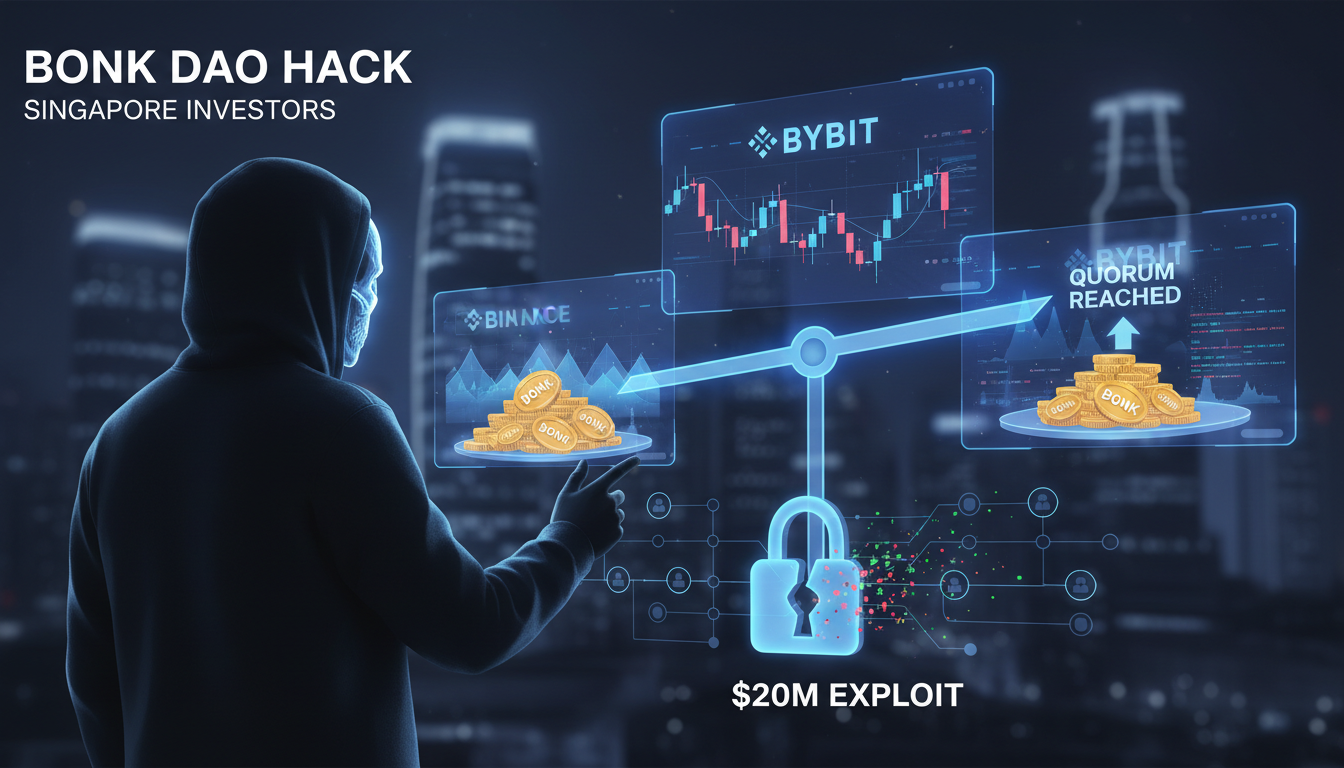
The BONK DAO hack on July 6 2026 has become a case study in how decentralised governance can be turned against itself. According to the briefed facts, the attacker spent about $4.4 million buying roughly 1% of the BONK supply, then used that voting power to pass a governance proposal that drained around $20 million from the DAO treasury.
For Singapore readers, this is not just another memecoin headline. It raises practical questions about token voting, treasury controls, exchange liquidity, and the risks SG investors face when trading community-led crypto assets across global platforms.
The BONK governance attack appears to have relied less on a smart contract bug and more on the mechanics of DAO voting. The attacker first accumulated a large BONK position, reportedly spending around $4.4 million to acquire about 1% of the token supply. The purchases were made through major global exchanges, including Bybit and Binance, giving the attacker enough tokens to influence the outcome of a governance vote.
In a DAO, token holders can usually vote on proposals affecting the project’s treasury, parameters, or development direction. Voting weight often corresponds to token ownership: the more tokens a wallet controls, the more influence it has. In this case, the attacker used the newly acquired BONK tokens to reach the level of support needed for quorum and approval.
The proposal’s effect was straightforward: it authorised the transfer of treasury assets out of BONK DAO control and into the attacker’s hands. The available brief does not provide the exact proposal wording, so the safest interpretation is that the on-chain vote enabled a treasury movement that should not have passed under a more resilient governance process.
The economics of the DAO treasury exploit are what make the incident so striking. The attacker reportedly spent about $4.4 million to gain enough voting power, then drained approximately $20 million. That difference illustrates the core vulnerability: if governance participation is low, buying a relatively small percentage of supply can become cheaper than the value available inside the treasury.
The attack also shows why governance security is now part of crypto security. A protocol can have functioning smart contracts and still be exposed if voting thresholds, quorum rules, delegation practices, or treasury safeguards are too weak.
Why it matters for Singapore
Singapore has an active crypto trading and developer community. SG investors commonly access global markets where tokens like BONK are listed, and local builders are increasingly familiar with DAO-based models for community ownership, treasury spending, and decentralised product governance.
The BONK DAO hack matters because it highlights a risk that is easy to underestimate. A token may be liquid, popular, and widely discussed, yet its governance design can still expose holders to treasury losses. For memecoin security, the question is no longer only whether the token contract is safe. Investors also need to understand who can vote, what they can vote on, and how quickly treasury decisions can be executed.
The Monetary Authority of Singapore, or MAS, has taken a cautious approach to crypto activity while encouraging stronger governance and risk controls in digital asset markets. Although DeFi governance is not always regulated in the same way as traditional financial entities, Singapore-based participants should expect governance quality to become a more important due diligence factor.
For developers, the lesson is equally direct. DAO design is not just a community feature; it is a security surface. Quorum thresholds, proposal review periods, emergency pauses, treasury limits, and multi-signature approvals can all affect whether a governance system is resilient or easily captured.
Understanding DAO governance for newcomers
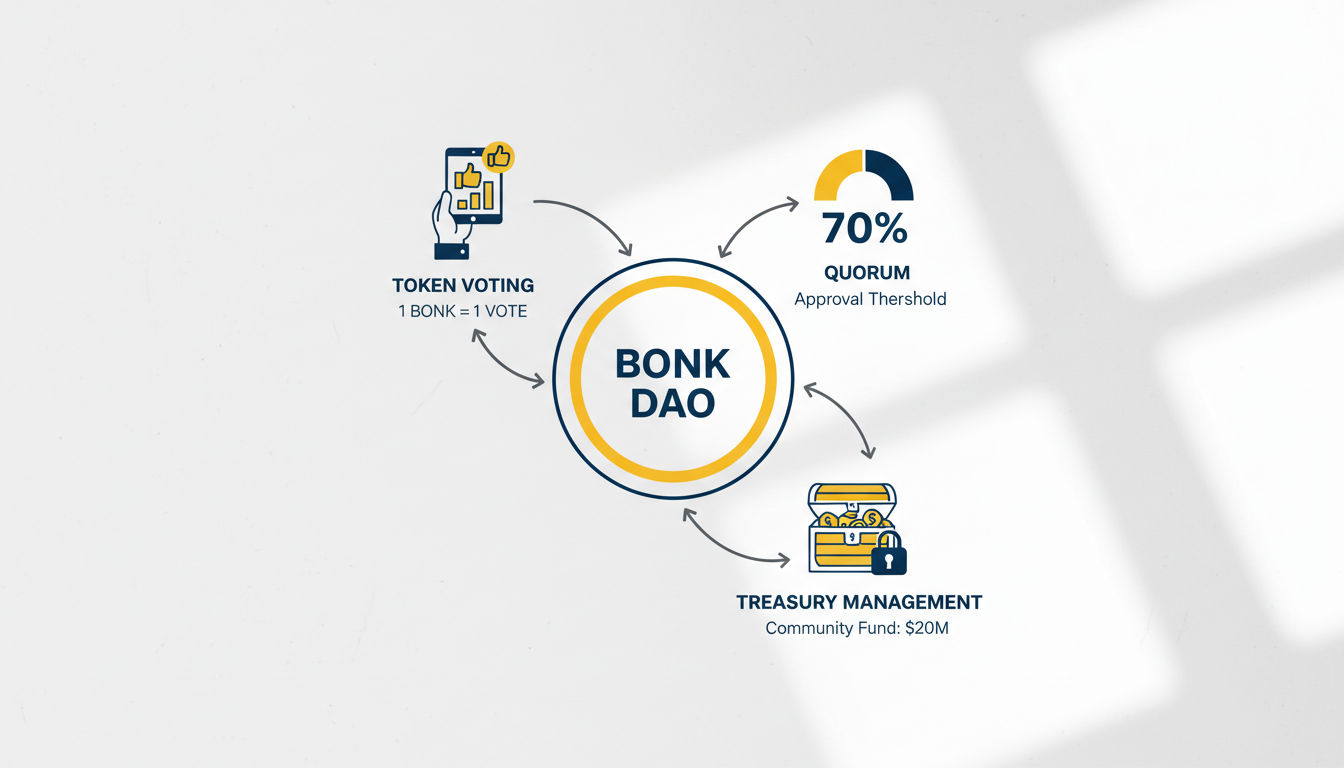
A decentralised autonomous organisation, or DAO, is a structure where decisions are made by token holders rather than a traditional management team. A simple analogy is a digital cooperative: members vote on proposals, and approved proposals can trigger actions through smart contracts.
Token voting is the most common model. If one person holds more governance tokens than another, they usually have more voting power. That can make sense when token ownership represents economic exposure, but it also creates a risk: someone can buy influence.
Quorum is the minimum level of participation needed for a vote to count. For example, if too few holders vote, a proposal should fail automatically. But if quorum is low, or if ordinary holders do not participate, a motivated attacker may be able to push through a decision with a relatively small share of total supply.
Treasury management is another key concept. Many DAOs hold funds to support development, grants, liquidity, marketing, or community programmes. Those assets are often controlled by governance. If a proposal can move treasury funds directly, then governance becomes equivalent to a vault key.
BONK is a useful case study because the reported attack did not require control of most of the supply. The attacker used roughly 1% of BONK supply, combined with sufficient participation dynamics, to pass a damaging vote. That is why low turnout can be dangerous: inactive holders indirectly increase the power of active voters, including hostile ones.
Market reaction and investor sentiment
The BONK DAO hack is likely to weigh on how investors evaluate memecoin projects, particularly those with large treasuries or loosely governed community structures. The brief does not provide verified BONK price movement data, so any specific claim about price drops or recoveries should be treated cautiously unless confirmed by reputable market sources.
Even without precise price data, the investor impact is clear. Confidence can be affected when a token’s governance system allows a large treasury transfer against the interests of ordinary holders. For BONK holders, the immediate concern is treasury recovery and governance repair. For broader memecoin market participants, the incident reinforces the need to look beyond social momentum and exchange listings.
The Solana ecosystem may also face scrutiny because BONK is closely associated with Solana memecoin news and community activity. That does not mean Solana itself was compromised. Based on the brief, this was a governance attack involving BONK DAO processes, not a failure of the Solana blockchain.
The brief also notes that exchanges such as Bybit and Binance, along with ecosystem participants including the Solana Foundation, may be involved in recovery efforts where possible. Without verified official statements or recovery figures in the provided facts, the most responsible position is to say that cooperation with exchanges and ecosystem organisations can matter, but recovery is never guaranteed.
Risks, limitations and lessons
The main lesson from the BONK governance attack is that decentralisation without safeguards can create exploitable gaps. If voting power is concentrated, participation is low, and treasury proposals execute quickly, attackers may find governance capture economically attractive.
Project teams should consider stronger governance best practices, such as higher quorum thresholds, longer voting windows, time locks before treasury transfers, independent proposal review, multi-signature treasury controls, and limits on how much value can move in a single vote.
Token holders also have a role. Passive ownership can increase risk when governance systems depend on participation. Holders should monitor proposals, delegate votes where appropriate, and understand whether a DAO’s treasury can be moved through token voting alone.
Current on-chain governance models still have limitations. They can be transparent but slow to interpret, open but vulnerable to vote buying, and automated but difficult to reverse once funds move. The BONK DAO hack shows that governance design must be treated as core infrastructure, not a secondary feature.
Conclusion
The BONK DAO hack was a governance exploit, not simply a memecoin scandal. The attacker reportedly spent about $4.4 million to buy roughly 1% of BONK supply, used that voting power to pass a DAO proposal, and drained around $20 million from the treasury.
For Singapore investors and developers, the incident is a warning about DAO treasury risk, low voter participation, and the limits of token-based governance. It also shows why crypto security Singapore discussions should include governance design alongside smart contract audits and exchange risk.
The future outlook depends on recovery efforts, governance reforms, and whether DAO communities adopt stronger safeguards before similar attacks occur elsewhere.
FAQ
What is BONK DAO?
BONK DAO is the community governance structure associated with BONK, a Solana-based memecoin. It helps coordinate decisions around community resources and treasury activity, with token voting used as part of the governance process.
How did the hacker get enough votes?
The attacker reportedly spent around $4.4 million buying about 1% of the BONK supply through major exchanges. Because DAO voting power is linked to token holdings, that position was enough to influence the vote and pass the harmful proposal.
Can the stolen funds be recovered?
Recovery may depend on tracing funds, exchange cooperation, and actions by BONK DAO and Solana ecosystem participants. The brief mentions possible cooperation with exchanges and the Solana Foundation, but no confirmed recovery amount is provided.
How can DAOs protect against governance attacks?
DAOs can reduce risk with higher quorum requirements, time locks, treasury transfer limits, multi-signature approvals, longer voting periods, and active voter participation. These safeguards make it harder for one actor to capture governance quickly.
Is this financial advice?
No. This article is for informational purposes only. Cryptocurrency investments are volatile, and DAO tokens can carry market, technical, governance, and liquidity risks. Always do your own research before making financial decisions.


