
US Crypto Bill Renews Focus on India’s Missing VDA Regulatory Framework
Regulatory progress in the United States has put India crypto regulation 2026 back in focus. The Digital Asset Market Clarity Act, now drawing attention in the United States, has renewed debate over why India still lacks a comprehensive Virtual Digital Asset law. India already taxes and monitors VDA activity, but the absence of a full market-structure framework remains central to the latest crypto regulation debate.
## US Crypto Bill Puts India’s VDA Framework Back in Focus
Business Standard reported on 11 August 2026 that movement in the U.S. Senate on the Digital Asset Market Clarity Act has sharpened attention on India’s regulatory gap for Virtual Digital Assets. The proposed U.S. legislation is designed to create clearer rules for digital-asset markets, including how assets are classified and which regulator should oversee different parts of the sector.
The bill has already passed the U.S. House of Representatives, with U.S. House material referencing passage on 17 July 2025. It has not, however, become enacted law. Its current relevance lies in the way it addresses market structure, disclosure, exchange oversight and the long-running jurisdiction question between the U.S. Securities and Exchange Commission and the Commodity Futures Trading Commission.
For Indian readers following the latest crypto news, the significance is not that U.S. law applies in India. It does not. The issue is comparison. The United States is attempting to define regulatory responsibilities for digital assets through legislation, while India still regulates VDAs through separate tax and compliance rules rather than a single statutory framework covering the full market.
That contrast has made the US crypto bill India discussion more than a foreign policy story. It has become a reference point in the domestic debate over VDA regulation India and whether a clearer crypto law India 2026 framework is needed.
## Why the Development Matters for India
India’s crypto sector is not operating in a legal vacuum. The country already has rules that affect investors, exchanges and other VDA service providers. These include taxation, anti-money-laundering obligations, know-your-customer checks and reporting requirements. But those rules are not the same as a comprehensive market-structure law.
A full cryptocurrency regulation India framework would typically address areas such as issuance, trading venues, intermediaries, market conduct, custody standards, investor protection, complaints handling and dispute resolution. The latest India-focused coverage highlights this distinction: India regulates parts of VDA activity, but it has not created an equivalent statutory framework for the wider digital-asset market.
### India’s Parliamentary Panel Wants the Regulatory Gap Reviewed
The Parliamentary Standing Committee on Finance has recently recommended a comprehensive examination of an appropriate legal and regulatory framework for VDAs, according to the Business Standard report. That recommendation matters because it recognises the difference between tax compliance and market oversight.
The committee has also discussed an interim concept involving recognised self-regulatory organisations, or SROs, operating under the supervision of a designated regulator. Such a model would not be the same as a final crypto law India 2026 framework, but it could provide a transitional mechanism for setting standards among Indian VDA service providers while policymakers consider a broader India crypto framework.

## How Crypto Is Currently Regulated in India
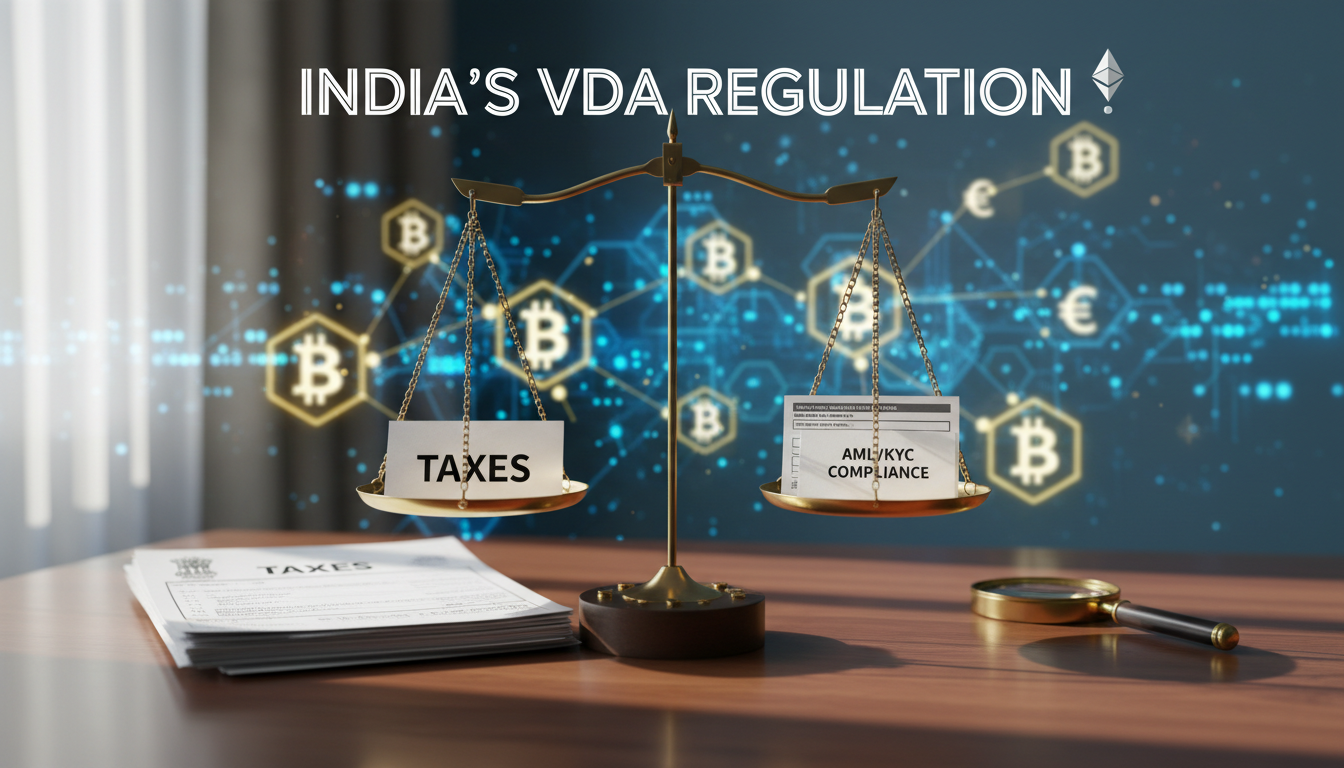
The clearest way to understand crypto rules India 2026 is to separate three layers: taxation, AML/KYC compliance and comprehensive regulation. India already has the first two. It does not yet have the third in the form of a standalone market-structure law for all major VDA activity.
For example, Bitcoin, Ether and some stablecoin transactions may fall within India’s VDA tax and reporting regime depending on the nature of the transaction. The Income Tax Department maintains specific VDA tax provisions, while FIU-IND maintains AML/CFT registration and compliance requirements for VDA service providers. This means describing Indian crypto as simply “unregulated” is inaccurate.
At the same time, taxation and AML supervision do not answer every market question. They do not, by themselves, create a full framework for token listing standards, exchange conduct, custody norms, investor grievance redressal, market manipulation controls or the division of responsibility among RBI, SEBI and other authorities.
For wider context on India’s most recognised digital asset, readers can follow Bitcoin regulation and market updates.
### VDA Tax Rules
India has a specific tax regime for Virtual Digital Assets. The Income Tax Department currently states that gains from VDAs are subject to a 30% special tax rate, and VDA transactions have dedicated tax-reporting provisions. Any numerical tax treatment should be checked against the latest Income Tax Department guidance before publication or filing, especially after India’s 2026 tax transition.
The key point for investors is that tax treatment does not equal legal tender status. Taxing VDA income means the government has created obligations around reporting and payment of tax. It does not mean cryptocurrencies such as Bitcoin or Ether are treated like the rupee.
### AML and FIU-IND Requirements
FIU India crypto regulation is another major pillar of the current system. FIU-IND requires VDA service providers to register and follow AML/CFT obligations under India’s compliance framework. These obligations include KYC, customer due diligence, transaction monitoring and reporting of suspicious activity.
FIU-IND lists updated AML/CFT guidelines for VDA service providers dated 8 January 2026. These requirements are especially relevant for crypto exchanges, custodial platforms and other intermediaries handling digital-asset transactions for users in India.
## What the US CLARITY Act Is Trying to Change
The Digital Asset Market Clarity Act is a U.S. legislative effort to create a clearer market structure for digital assets. In simple terms, it seeks to define when a digital asset should be treated as a security, when it may be treated as a digital commodity, and which regulator should supervise different activities.
That matters because U.S. crypto regulation has often turned on the SEC vs CFTC crypto question. Securities markets are mainly overseen by the SEC, while commodity derivatives and certain commodity-market functions fall under the CFTC. The Senate Banking Committee’s current framework specifically addresses clearer SEC/CFTC jurisdiction and classification of digital assets.
The proposed U.S. model also deals with exchange and intermediary regulation, disclosure requirements, consumer and investor protection, and how digital-asset trading infrastructure should be supervised. These are the same broad themes Indian policymakers may need to address if India moves from tax-and-compliance rules to a fuller VDA market framework.
### Why India Cannot Simply Copy the US Model
The U.S. development is useful as an international comparison, not a template that India can automatically adopt. India’s financial system, retail investor base, capital controls, tax structure and regulatory institutions differ from those in the United States.
India also has policy concerns that are specific to its domestic environment. The Reserve Bank of India has maintained a notably cautious stance toward private cryptocurrencies, while SEBI’s role in securities markets is structured differently from the SEC’s position in the U.S. system. A future Indian framework would have to account for RBI, SEBI, the Ministry of Finance, FIU-IND and Parliament.
That is why the US crypto bill India debate should be read carefully. The Digital Asset Market Clarity Act may influence discussion, but it does not signal that India will adopt the same definitions, licensing model or regulator split.
## What a Clearer VDA Framework Could Mean for Indian Investors and Exchanges
A comprehensive India VDA law could affect investors and businesses in several ways, but these remain potential outcomes rather than confirmed policy. Business Standard’s report notes concerns that the current regulatory gap can create uncertainty around investor protection, fraud, manipulation and grievance redressal.
### For Crypto Investors
For Indian crypto investors, clearer rules could potentially improve legal certainty around trading and holding VDAs. A future framework may introduce stronger disclosure standards, clearer custody expectations, fraud safeguards and formal grievance mechanisms.
It could also define how exchanges must communicate risks, manage user assets and monitor market manipulation. That would be especially relevant for retail users who trade Bitcoin, Ether, stablecoins or other VDAs through domestic and overseas platforms.
### For Exchanges and Web3 Companies
For crypto exchanges India and Web3 companies, a clearer framework could bring both advantages and costs. Registration, licensing, reporting, token listing procedures and compliance obligations may become more defined if a statutory regime is introduced.
Operational certainty could encourage more structured participation by Indian VDA service providers and reduce regulatory arbitrage between domestic and offshore platforms. At the same time, higher compliance costs may affect smaller startups, especially if custody, disclosure or market-surveillance standards become more demanding.
CoinSwitch co-founder Ashish Singhal was quoted in the latest Business Standard report discussing the significance of greater regulatory clarity. That reflects a broader industry view: predictable rules can help serious operators plan, but the details of any future framework will determine how practical it is.
## Key Risks and Questions That Remain
Several questions remain unresolved. Which Indian regulator would oversee different VDA activities? Would RBI, SEBI or another body take the lead? How would privately issued stablecoins be treated? Would exchanges need additional licensing? How would DeFi and self-custody fit into any framework?
There are also questions about investor protection, custody, market manipulation, taxation and how future rules would interact with the existing Income Tax Department and FIU-IND requirements. RBI’s cautious stance toward private cryptocurrencies means India’s final policy could differ substantially from the U.S. approach.
Until official rules are announced, investors should avoid assuming that any particular licensing model is imminent. Educational resources such as crypto trading guides can help users understand risks, but they are not a substitute for official regulatory updates or professional advice.
## What Happens Next for Crypto Regulation in India?
The U.S. regulatory process is progressing, but India’s path remains separate. India already taxes and monitors VDA activity through Income Tax Department provisions and FIU-IND compliance rules. What it still lacks is a comprehensive market-structure framework for issuance, trading, intermediaries and investor protection.
The Parliamentary Standing Committee on Finance has highlighted that gap, making India crypto regulation 2026 a key policy area to watch. Investors and businesses should monitor announcements from the Ministry of Finance, Parliament, RBI, SEBI and FIU-IND rather than assume that a U.S.-style law is coming.
## Frequently Asked Questions
### Is cryptocurrency legal in India in 2026?
Cryptocurrencies are not legal tender in India, but VDA transactions are subject to taxation and compliance requirements. The accurate answer to “is crypto legal in India 2026” is not simply legal or illegal: cryptocurrency India activity is regulated in specific ways.
### Does India have a comprehensive crypto law?
India has tax, AML and compliance rules for VDAs and VDA service providers, but it does not currently have a comprehensive standalone market-structure framework governing all major aspects of digital assets. That is the core VDA regulation India gap.
### What is the US Digital Asset Market Clarity Act?
The Digital Asset Market Clarity Act is a U.S. crypto regulation bill intended to create clearer treatment for digital assets, including classification, exchange oversight, disclosure rules and SEC/CFTC jurisdiction. It has not been presented here as enacted law.
### Could the US crypto bill change India’s crypto rules?
Not directly. U.S. legislation has no legal effect in India. However, the US crypto bill India debate matters because major international frameworks can serve as reference points for Indian policymakers considering future India crypto regulation.
Cryptocurrency markets are volatile. This article is provided for informational purposes only and does not constitute investment, legal or tax advice.


