
Fresh crypto airdrops are no longer simple “connect wallet and claim” campaigns. In 2025–2026, major crypto platforms are shifting toward points, trading volume, deposits, liquidity provision, and long-term usage to reward real participants. For users who want early access to token distributions, the strategy is clear: understand how each platform works, register or connect the right account, activate it through real product use, and follow official announcements before snapshots happen.
Introduction to Airdrops and Their Evolution
A crypto airdrop is a token distribution designed to attract users, reward activity, and build early network effects around a platform. In earlier cycles, many projects used broad giveaways to promote awareness. Today, the model is more selective. Projects want to identify genuine users, encourage trading or deposits, and make token allocation more closely tied to useful activity inside the ecosystem.
This shift is especially visible across prediction markets, Ethereum wallets, layer-2 networks, NFT marketplaces, Solana DeFi protocols, omnichain infrastructure, and perpetual futures exchanges. Platforms such as Polymarket, MetaMask, Base, Aster, OpenSea, Meteora, Hyperliquid, LayerZero, Abstract, edgeX, and Lighter are all connected to confirmed, planned, or widely anticipated token distributions. Some have already introduced points programs, seasonal rewards, or allocation percentages, while others have only signaled future token plans.
For a user, the practical funnel is similar across most opportunities: create or connect an account, complete profile setup where required, activate platform access by using the product, and continue with real activity rather than one-off spam transactions. A minimum deposit is not universal across these airdrops, and the briefed projects do not all publish a fixed amount. Instead, eligibility often depends on trading volume, liquidity deposits, wallet usage, fees generated, bridge activity, referrals, or long-term participation.
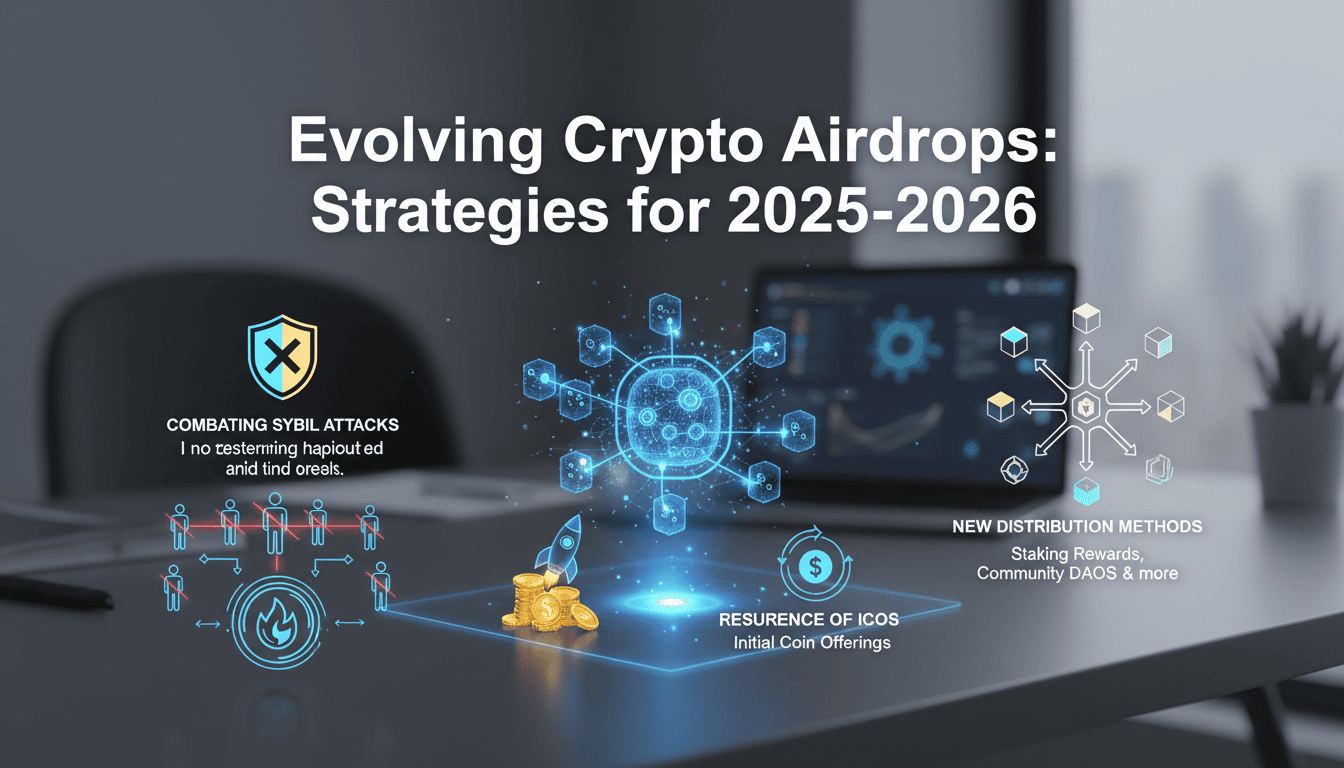
Why Airdrops Are Changing: Sybil Attacks, ICOs, and New Mechanics
The first major reason airdrops are evolving is the fight against sybil attacks. A sybil strategy involves creating many wallets or accounts to appear as many separate users. To reduce this behavior, projects increasingly link rewards to measurable activity: trade size, deposited liquidity, fee generation, account history, referrals with quality filters, or repeated use of core tools. Polymarket and edgeX, for example, are associated with activity-based eligibility logic and anti-sybil filtering.
The second force is the return of initial coin offerings. With major exchanges such as Coinbase and Kraken preparing token-sale venues, token launches may rely less on large public airdrops and more on sales, auctions, or smaller incentive programs. That does not make airdrops disappear, but it can reduce the percentage of supply distributed for free and make users compete through deeper engagement.
The third trend is competition among perpetual DEX platforms. Hyperliquid’s success pushed rivals to design multi-stage points programs, trading campaigns, liquidity incentives, and several possible airdrop rounds. Aster, edgeX, and Lighter show how the market is moving from a single claim event toward seasons, points, snapshots, and staged token allocation.
Overview of Key Future Airdrops in 2025–2026
The most attractive airdrop opportunities now tend to sit at the intersection of product usage and token speculation. Some projects have confirmed token plans, while others have not announced a formal airdrop but have introduced the type of points or rewards system that often comes before one. The table below summarizes the central idea behind each opportunity and the main action users can take to prepare.
| Platform | Category | Airdrop Status | Main User Action |
|---|---|---|---|
| Polymarket | Prediction market | POLY confirmed | Trade across categories |
| MetaMask | Ethereum wallet | MASK expected | Use wallet, Linea, mUSD, bridges |
| Base | Coinbase L2 | Token under exploration | Use Base dApps and quests |
| Aster | Perp DEX | Multi-stage airdrops | Trade perps, provide liquidity |
| OpenSea | NFT marketplace | SEA delayed | Trade NFTs and keep activity |
| Meteora | Solana DEX | MET season 2 | Provide liquidity and earn fees |
| Hyperliquid | Perp DEX | Future emissions reserved | Trade, stake, provide liquidity |
| LayerZero | Omnichain protocol | Future distributions possible | Use Stargate and partner bridges |
| Abstract | L2 network | XP system live | Earn XP, hold eligible assets |
| edgeX | Perp DEX | Open Season points | Trade, refer, contribute liquidity |
| Lighter | Ethereum-L2 DEX | LIT allocation planned | Accumulate Lighter Points |
This overview is not a promise of allocation. It is a practical map of where confirmed and potential reward programs are concentrated, and how users can position themselves through real platform access and consistent account activity.
Polymarket — Prediction Market, Growth Story, and Potential Airdrop
Polymarket is a decentralized prediction market built on Polygon. It allows users to trade outcomes of real-world events, turning market expectations into tradable positions. The platform has become a leader in the prediction-market category, with large trading volumes and investment interest from ICE and major crypto venture firms.
The airdrop case became stronger in October 2025, when CMO Matthew Modabber confirmed that a POLY token would be released and that an airdrop would take place. In February 2026, analysts also found a $POLY trademark registration, further increasing expectations around the token. Users interested in potential eligibility should focus on genuine trading behavior rather than isolated wallet interactions.
A practical Polymarket setup begins with account access, profile completion, and regular trading in different event categories. Connecting a profile to X, formerly Twitter, is also suggested by authors tracking the opportunity. Since Polymarket’s model is tied to real market activity, users should approach it as a product first: choose markets they understand, maintain consistent participation, and avoid artificial activity patterns.
For more context on the opportunity, see Polymarket.
MetaMask — MASK Token Expectations and the Rewards Program
MetaMask is one of the most widely used Ethereum hot wallets and was created by Consensys. Its role in crypto is unusually central: users rely on it to connect to dApps, swap tokens, bridge assets, and manage access to Ethereum-compatible ecosystems. That makes MetaMask a major candidate for a large user-focused token event.
In September 2025, Consensys CEO and Ethereum co-founder Joseph Lubin said that a MetaMask token would arrive “sooner than expected.” That statement triggered speculation about a possible MASK airdrop. Later in 2025, MetaMask launched MetaMask Rewards, allocating more than $30 million in Linea tokens for the first seasonal distribution. The program includes referral bonuses and rewards involving mUSD, with activity linked to Linea usage and the mUSD stablecoin. The team also indicated that “OG users will not be forgotten.”
Although the final MASK token conditions are not known, a sensible participation path is clear. Users can access MetaMask, keep the wallet active, use swaps, test perps where available, bridge assets, explore Linea, and interact with mUSD-based incentives. There is no fixed minimum deposit disclosed across the briefed information; instead, activity and product usage appear to matter more than a single activation amount.
Further details are available in CoinDesk.
Base — Coinbase Token Plans and a Possible Airdrop
Base is a layer-2 network built on Optimism technology and developed by Coinbase. For a long time, the team said it did not plan to issue a token. That position changed on September 15, 2025, when Base lead Jesse Pollak stated that the project was exploring the possibility of launching its own token. For Coinbase, this was a significant policy shift, and it opened the door to a potential Base airdrop.
Base is especially attractive because it connects Coinbase’s brand with an active on-chain ecosystem. A user interested in possible eligibility can start by setting up access to Base-compatible tools, interacting with dApps on the network, completing ecosystem quests, and following launch notifications. The emphasis should be on varied, meaningful activity rather than minimal one-time transactions.
For an account-style approach, users can treat Base participation as an ecosystem onboarding process: bridge or move supported assets where available, explore applications, return over time, and keep records of activity. Since no official airdrop terms or minimum deposit are confirmed in the brief, users should avoid assuming that a single deposit will be enough.
For additional guidance, read Bankless.
Aster — Multi-Stage Drops and Participation in the Rh Program
Aster is a perpetual-contract DEX launched in late September 2025 and positioned as a project funded by the Zhao family associated with Binance. Its token distribution design is one of the clearest among the platforms in this guide: 53.5% of the total ASTER supply is allocated to airdrop campaigns, and the distribution is split into stages.
The fifth stage, called “Crystal,” began on December 22, 2025 and lasted six weeks. It distributed 1.2% of supply, equal to about 96 million ASTER, with 0.6% available for immediate claim and another 0.6% subject to three-month vesting. Later stages are expected to involve smaller emissions and stricter requirements, which makes early and consistent activity more valuable.
To build Rh points, users can trade perpetual contracts, provide liquidity through USDF or asBNB, and invite friends. Aster therefore follows the modern airdrop funnel closely: create access, activate the account through trading or liquidity activity, keep participation consistent, and monitor stages. Unlike generic sign-up campaigns, Aster’s system rewards deeper product use and may favor users who understand the platform’s trading mechanics.
Details on the stage are available at Aster.
OpenSea — SEA Token and Launch Uncertainty
OpenSea is one of the best-known NFT marketplaces, and its SEA token announcement in October 2025 created strong interest among NFT traders. Initially, the team said the token would launch in the first quarter of 2026, with 50% of revenue planned for SEA buybacks. However, in March 2026, OpenSea postponed the launch indefinitely due to unfavorable market conditions.
The delay does not remove the potential opportunity. It changes the user strategy from short-term claiming to long-term positioning. According to the briefed expectations, historical activity will be considered, so users who continue trading NFTs on OpenSea and hold popular collections may be better placed if the SEA airdrop returns to the launch schedule.
For users approaching OpenSea commercially, the first step is platform access and marketplace activity. That can include browsing collections, buying or selling NFTs, and maintaining a visible usage history. No fixed minimum deposit is provided. The “activation” in this context is not a standard cash deposit but meaningful marketplace participation.
For a broader overview, see OpenSea.
Meteora — MET Features and the Second Season
Meteora is a liquidity market maker on Solana using a dynamic AMM model. The protocol holds more than $964 million in TVL and ranks among the top 10 Solana DeFi protocols. In October 2025, Meteora launched the MET token and its first airdrop, but the opportunity did not end there. The team has stated that season 2 of the airdrop is ongoing.
The main distribution criterion for Meteora’s second season is the amount of fees generated by providing liquidity. This makes Meteora different from simple task-based programs. Users are not only registering or connecting a wallet; they are contributing capital to liquidity pools and generating measurable protocol activity.
To improve potential eligibility, users may provide liquidity in pools with high-volatility pairs, including meme coins. However, this requires understanding impermanent loss. The platform may appeal to users who are already comfortable with Solana DeFi, liquidity positions, and fee-based incentives. There is no single minimum deposit specified in the brief, so position sizing depends on user preference, available pools, and supported assets.
More information is available in Meteora.
Hyperliquid — Record Airdrop and Future Emissions
Hyperliquid is a decentralized perpetual futures exchange that completed the largest crypto airdrop in history in 2024. That event made Hyperliquid a reference point for the entire perp-DEX sector and pushed competitors to create their own points, stages, and trading-based incentives.
The future opportunity comes from token allocation. CoinGecko’s project description notes that 38.88% of HYPE tokens are reserved for future “emissions.” This has encouraged speculation about a second airdrop season or additional user rewards. While no guaranteed claim is described, the reserved emissions give active users a reason to keep engaging with the platform.
A practical strategy involves using the exchange’s core features rather than only creating an account. Users may trade with leverage, stake, provide liquidity, and explore copy trading where available. Hyperliquid’s potential advantage is that it rewards behavior tied directly to its main product: perpetual trading. Account activation, in this setting, means building a real usage history on the platform and continuing to interact with available tools.
For more background, visit Hyperliquid.
LayerZero — Omnichain Infrastructure and Second-Season Expectations
LayerZero builds infrastructure for transferring data and tokens between blockchains. In February 2026, the company introduced its own L1 network, Zero, and announced investment from Tether, Citadel Securities, and Ark Invest. This expanded LayerZero’s position from cross-chain messaging infrastructure into a broader omnichain ecosystem.
The first ZRO airdrop distributed 8.5% of supply, while around 30% of tokens are intended for future distributions. CEO Bryan Pellegrino has emphasized “real usage” and cautioned against farming, which the community has interpreted as a possible signal toward a second airdrop season.
Users who want exposure to future LayerZero distributions should focus on actual protocol interaction. That includes using LayerZero-related products such as Stargate, Aptos Bridge, and partner dApps. A good workflow is to connect the right wallet, bridge assets where supported, interact across multiple chains, and continue over time. Since the project has clearly stated a preference for real usage, repetitive low-quality actions may be less valuable than consistent, natural activity.
Read more in LayerZero.
Abstract Chain — Pudgy Penguins Network with an XP System
Abstract Chain is an L2 network from Igloo Inc., the company behind the Pudgy Penguins NFT collection. It is built on zkSync and EigenDA, with the goal of simplifying blockchain interaction and creating the Abstract Global Wallet, or AGW. This focus on usability makes Abstract especially interesting for users who want a smoother onboarding experience rather than a complex DeFi-only environment.
After launching in January 2025, Abstract introduced an XP points and badge system. There is no official airdrop confirmation in the brief, but points systems often appear before token distributions. That makes XP accumulation a key area to watch.
Users can participate by accessing the Abstract ecosystem, using AGW-related tools, earning XP, and collecting badges. Holders of Pudgy Penguins NFTs and the PENGU meme coin receive additional bonuses, including a Discord role with increased XP. In this case, account activation may involve wallet setup, ecosystem participation, and ownership of special assets where applicable.
For further context, see Abstract.
edgeX — Open Season Points and Activity-Based Distribution
edgeX is a perpetual DEX built on StarkWare infrastructure and is gaining attention as a competitor to Hyperliquid. Its Open Season program provides a structured model for future emissions: 60% is allocated for trading, 20% for referrals and events, and the remaining portion for liquidity pool contributions, liquidations, and open positions.
Weekly activity snapshots make timing important. Users cannot simply appear at the end of a campaign and expect the same profile as long-term participants. The system also automatically excludes pseudo-trades, reinforcing the broader market shift toward real activity and away from empty transaction farming.
A user preparing for edgeX should register or access the platform, trade consistently, invite relevant friends, and consider liquidity participation where suitable. The points earned during Open Season are expected to convert into tokens later, so dashboard tracking and weekly participation can be central to the user experience.
More details are available on edgeX.
Lighter — 25% of Tokens Through TGE and Points Farming
Lighter is a DEX built on Ethereum L2 and connected to the upcoming LIT token. According to the official BingX guide, 25% of the 1 billion LIT supply, or 250 million LIT, will be distributed among participants in the points program. The distribution is described as having no vesting and no requirement for users to manually claim tokens.
The TGE is planned before December 31, 2025. Eligible users who accumulated points in seasons 1 and 2 are expected to receive tokens automatically. Lighter has already attracted attention with $248 billion in 30-day trading volume and contracts connected to real-world assets.
The participation path is straightforward: access Lighter, trade on the platform, and accumulate Lighter Points. Season 2 participation ends in 2025, so users interested in this opportunity should not treat it as an open-ended campaign. As with other trading-based airdrops, the account becomes meaningful only after activity begins. No profit is promised by trading or depositing assets; the goal is to build legitimate points-based eligibility.
For the platform guide, read BingX.
How to Increase Your Chances of Participating in Airdrops
The strongest airdrop strategies now look more like product usage plans than one-time campaigns. Users who want to position themselves across 2025–2026 opportunities should focus on account quality, consistent access, and activity that matches the platform’s main purpose.
- Use platforms for real activity. Trading volume, liquidity provision, bridge usage, fee generation, and account history are increasingly important. Polymarket, edgeX, Aster, Hyperliquid, Meteora, and Lighter all connect potential rewards to measurable participation.
- Complete registration and profile setup where required. Some platforms need a user profile, social connection, wallet connection, or dashboard access. Polymarket users, for example, are advised to link a profile to X.
- Activate the account through product use. A deposit is not a universal fixed amount across these campaigns. Where deposits or liquidity are involved, they should be treated as part of platform activity, not as a guaranteed route to tokens.
- Explore internal tools. MetaMask users can interact with swaps, bridges, Linea, and mUSD. Base users can complete quests and test ecosystem dApps. LayerZero users can explore Stargate, Aptos Bridge, and partner applications.
- Stay active over time. Many programs value the first interaction date, ongoing participation, and weekly snapshots. Early users may receive priority if historical activity is included.
- Hold special assets where relevant. Abstract gives extra advantages to Pudgy Penguins NFT and PENGU holders, while MetaMask Rewards connects activity to Linea and mUSD incentives.
- Follow official announcements. Snapshot dates and exact eligibility rules often appear only weeks before a claim or TGE. Users should monitor official channels as well as research portals such as CoinGecko and AirdropAlert.
For most users, the best workflow is simple: choose two or three ecosystems that match your existing habits, register or connect access, perform meaningful actions, track points or rewards in the dashboard, and continue monitoring announcements. Spreading tiny transactions across every project may be less effective than building strong activity on platforms you genuinely use.
Conclusion: The Future of Airdrops and Key Takeaways
Airdrops remain one of the most attractive ways for crypto users to receive new tokens, but the rules are becoming more demanding. Projects are fighting sybil behavior, adjusting to the return of ICOs, and rewarding users who contribute real value through trading, deposits, liquidity, bridges, marketplace activity, or ecosystem participation.
The most important 2025–2026 opportunities include Polymarket, MetaMask, Base, Aster, OpenSea, Meteora, Hyperliquid, LayerZero, Abstract, edgeX, and Lighter. Some have confirmed tokens, some have active points programs, and others have delayed or exploratory plans. The practical next step is to create or connect your account on the platforms that fit your strategy, activate access through genuine usage, and follow the official updates before snapshots and token events are announced.


