
Singapore is one of the easiest places in Asia for beginners to start exploring crypto, but buying coins is only the first step. Storing them safely matters just as much. If you are comparing the best crypto wallets in Singapore for beginners, the real decision is usually between a hot wallet and cold storage. Each serves a different purpose: hot wallets make everyday use simple, while cold wallets prioritise long-term protection. This guide explains how both work, when to use each one, and what Singapore-based users should know about security, regulation and tax.
What a crypto wallet actually does
A crypto wallet does not “hold” coins in the same way a bank account holds cash. Instead, it stores the private keys that prove you own and can move your digital assets. If you control the keys, you control the crypto. If someone else controls the keys, you are trusting them to give you access when needed.
For beginners, wallets usually fall into two broad categories:
- Non-custodial wallets – you hold your own private keys. This includes software wallets such as Trust Wallet and MetaMask, plus hardware wallets like Ledger, Trezor and Tangem.
- Custodial wallets – a third party, usually an exchange, controls the keys on your behalf. Exchange accounts with Coinbase, Kraken or Binance are examples. These are convenient, but your access depends on the platform’s security and solvency[2].
This distinction matters because many first-time investors think storing crypto on an exchange is the same as using a wallet. It is not. A custodial account may be fine for active trading, but if your goal is ownership and long-term control, a non-custodial wallet is often the safer choice.
In Singapore, the broader environment is supportive. The Monetary Authority of Singapore regulates digital asset service providers under the Payment Services Act 2019[1], while individuals can legally own and use crypto. That makes wallet choice more about convenience, risk and personal responsibility than legal access.
Hot wallets: best for convenience and daily activity
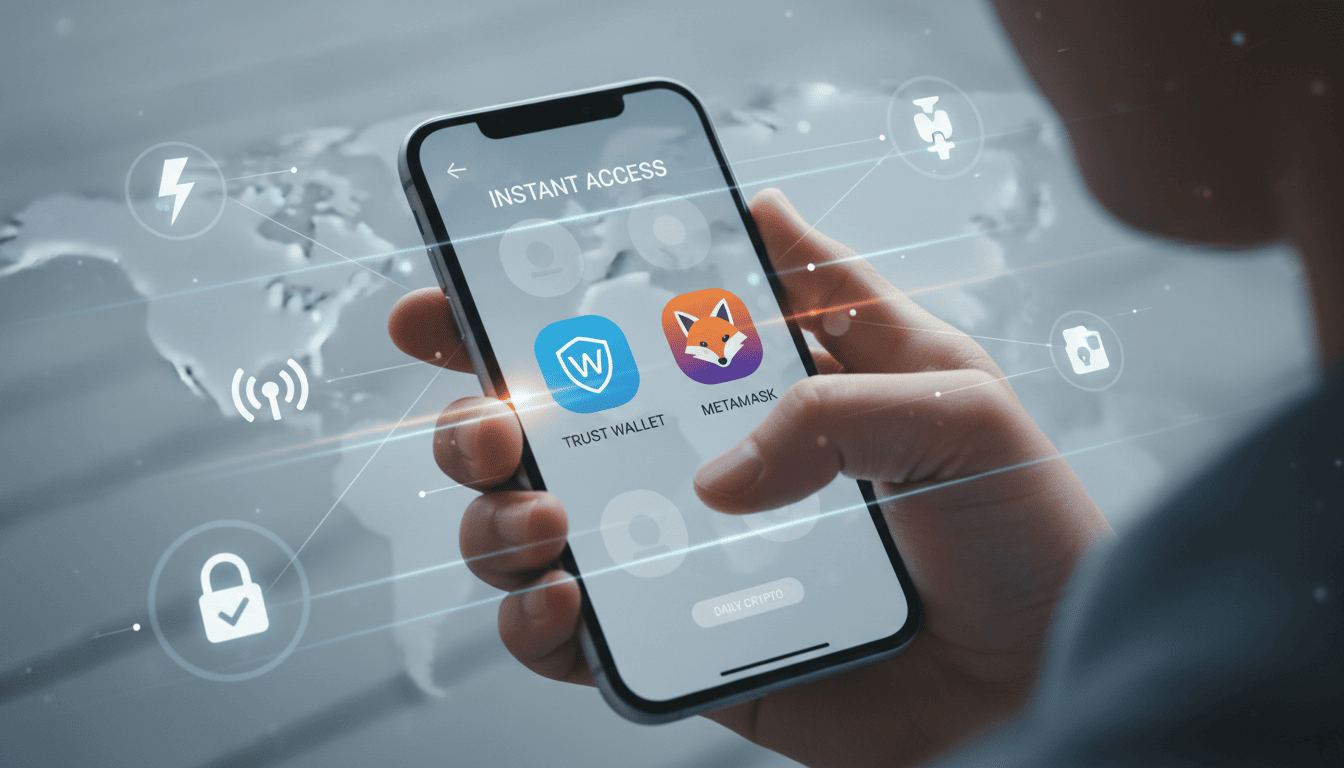
A hot wallet is a wallet connected to the internet. In practice, that usually means a mobile app or browser extension you use on your phone or laptop. Hot wallets are popular because they are easy to set up, easy to access and ideal for quick transactions.
According to Kaspersky, hot wallets exist digitally and remain online, which makes them more exposed to hacking, phishing and malware[3]. That risk is the trade-off for speed and convenience.
For most beginners in Singapore, a hot wallet makes sense if you plan to:
- buy small amounts of crypto and move them yourself
- use decentralised apps and DeFi platforms
- collect or trade NFTs
- send funds quickly between wallets or exchanges
Popular beginner options include Trust Wallet, which supports a large number of blockchains and offers a user-friendly mobile experience, and MetaMask, which is widely used for Ethereum, Polygon and other EVM-compatible networks. Their convenience is a major reason they are often recommended to first-time users.
The key strengths of hot wallets are straightforward:
- Fast access – useful for swaps, transfers and dApp interactions.
- Beginner-friendly design – mobile apps and browser interfaces reduce friction.
- Multi-chain support – many hot wallets support multiple networks, tokens and built-in swap tools.
But beginners should not confuse convenience with safety. Because a hot wallet is always online, your private keys are more exposed than they would be in offline storage. A fake website, malicious browser extension or phishing message can be enough to compromise funds if you approve the wrong transaction[5].
That is why hot wallets are usually best for active use, not for storing your full portfolio. If you keep only the amount you expect to use, the risk becomes more manageable.
Cold wallets: best for long-term storage and stronger security
A cold wallet stores private keys offline. Most beginners encounter cold storage through hardware wallets, which are physical devices designed to sign transactions without exposing keys directly to the internet. Kaspersky notes that hardware wallets are physical and offline, which makes them harder for attackers to compromise[3].
This is why cold wallets are commonly seen as the best option for long-term holders, especially if the amount stored is meaningful to you.
If you buy crypto as a long-term investment and do not plan to move it often, cold storage usually offers the right balance of control and protection. Devices such as Ledger, Trezor and Tangem are built for this purpose.
The main benefits of cold wallets include:
- Stronger security – keys stay offline and transactions are signed on the device itself[6].
- True self-custody – you are not relying on an exchange to hold or release your funds.
- Better fit for larger balances – many users keep the bulk of their holdings in cold storage.
The downsides are mostly practical rather than technical:
- Less convenient – you need the physical device to send funds.
- Upfront cost – reputable hardware wallets must be purchased, and buying from unofficial sellers introduces extra risk.
- More personal responsibility – if you lose the device and the recovery phrase, your funds may be unrecoverable.
For beginners, cold storage can sound intimidating, but modern devices are much easier to use than many people expect. Setup is guided, companion apps are simple, and the security benefits are substantial if you are holding crypto beyond short-term trading.
Hot wallet vs cold storage: the key differences that matter
If you are deciding between a hot wallet and cold storage, the easiest way to think about it is this: hot wallets are for access, cold wallets are for protection.
The table below highlights the differences that matter most for beginners choosing a crypto wallet in Singapore.
| Feature | Hot Wallet | Cold Wallet |
|---|---|---|
| Internet connection | Always or frequently online | Stored offline except when signing transactions |
| Convenience | Very high for daily use | Lower, requires device access |
| Security | More exposed to phishing and malware[3] | Generally stronger for long-term storage[6] |
| Best use case | DeFi, NFTs, small balances, frequent transfers | Long-term holding, larger balances |
| Examples | Trust Wallet, MetaMask | Ledger, Trezor, Tangem |
| Cost | Usually free to install | Requires buying a hardware device |
For most beginners, this is not an either-or decision. The more practical approach is to use both. Keep a smaller amount in a hot wallet for regular activity and store the majority in cold storage[7]. That gives you flexibility without exposing your full holdings to everyday online risk.
How to choose the best crypto wallet in Singapore for your needs
The best crypto wallet in Singapore depends less on brand and more on how you plan to use crypto.
If you want a simple wallet for small amounts
A non-custodial hot wallet is often the easiest place to start. Trust Wallet is suitable if you want broad token and chain support in a straightforward mobile app. MetaMask is often the better fit if you expect to interact with Ethereum-based dApps, NFTs or DeFi platforms regularly.
If you want to explore DeFi and NFTs
You will likely need a hot wallet because many dApps and marketplaces are designed for direct wallet connection. In this case, convenience matters. You should still be selective about how much you keep in the wallet and carefully review approvals before signing transactions.
If you are buying to hold for the long term
A hardware wallet is usually the better option. Devices such as the Ledger Nano X, Trezor Safe 7 and Tangem Wallet are designed for offline security. Tangem may appeal to beginners who want a simpler, card-based form factor, while Ledger and Trezor remain established names for broader hardware-based storage.
If you are still using an exchange wallet
Exchange wallets are easy, but they are custodial. Tangem’s guide notes that they are useful for active trading but not ideal for long-term storage[2]. In Singapore, you should also verify that any digital asset platform is properly licensed by MAS under the relevant framework[1]. Even with a reputable provider, many users prefer withdrawing funds to a wallet they control.
The table below shows a simple way to match wallet type to beginner use cases.
| Your goal | Best wallet type | Why |
|---|---|---|
| Learn crypto with small balances | Hot wallet | Easy setup and quick access |
| Use DeFi and NFTs regularly | Hot wallet, optionally paired with hardware signer | Better dApp compatibility with added flexibility |
| Store crypto for months or years | Cold wallet | Offline key storage offers stronger protection |
| Trade actively on an exchange | Custodial exchange wallet for trading only | Convenient, but not ideal for long-term holding |
| Balance safety and convenience | Use both hot and cold wallets | Keeps daily funds accessible while securing the rest[7] |
For beginners, the mixed approach is often the most practical. It reduces stress, encourages better habits and avoids the common mistake of leaving everything on one platform or device.
How to set up your first wallet safely
Whichever option you choose, setup is where good habits start. Small mistakes at this stage can create major problems later.
Setting up a hot wallet
- Download only from the official source. Use the official website or trusted app store listing for Trust Wallet or MetaMask. Avoid links from ads, social posts or unsolicited messages.
- Create a new wallet. The app will generate a 12- or 24-word seed phrase. Write it down on paper and store it offline. Do not screenshot it, email it to yourself or save it in cloud storage.
- Secure the app. Use a strong password, enable biometric login if available, and turn on multi-factor authentication where relevant. Kaspersky recommends strong passwords and multi-factor authentication for hot wallet security[5].
- Test with a small transfer. Send a small amount first to confirm the wallet is working properly.
- Connect carefully. Before linking your wallet to a dApp or NFT marketplace, verify the URL and check the permissions you are approving.
Setting up a cold wallet
- Buy directly from the manufacturer. Purchase from the official store for Ledger, Trezor or Tangem. Avoid second-hand devices or unofficial marketplaces.
- Initialize the device yourself. Follow the setup wizard to create a new wallet. You will receive a recovery seed phrase. Write it down and keep it offline in a secure location.
- Install the official companion app. Use Ledger Live, Trezor Suite or the Tangem App to manage supported assets.
- Transfer a small amount first. Before moving a larger balance, send a test transaction and confirm the address on the hardware wallet screen.
- Disconnect and store safely. Once the transfer is complete, disconnect the device and keep it in a secure place. Because cold wallets remain offline, they are less exposed to online attacks[6].
One point matters in both cases: your recovery phrase is the real backup. If someone gets it, they can access your funds. If you lose it and lose access to the wallet, you may not be able to recover anything.
Security habits every beginner in Singapore should follow
Wallet choice matters, but day-to-day behaviour matters just as much. Many losses happen not because a wallet type is inherently unsafe, but because users are tricked into giving access away.
- Keep your seed phrase offline. Tangem’s guide stresses that seed phrases should never be shared and should be stored physically[8]. Paper or metal backups are safer than digital storage.
- Use strong passwords and MFA. This is especially important for hot wallets and exchange accounts[5].
- Update wallet software and firmware. Updates patch vulnerabilities and improve security[8].
- Verify every URL. Bookmark official sites and avoid clicking links sent through Telegram, Discord, email or direct messages.
- Use cold storage for larger balances. Keeping most funds offline lowers your exposure to phishing and malware[7].
- Be careful with exchange wallets. Custodial wallets are convenient, but they expose you to platform risk[2]. If you do use one, enable all available security settings and verify the provider’s licensing status.
- Consider extra protection tools. Kaspersky also recommends tools such as antivirus software, password managers and VPNs as part of a broader security setup[9].
For Singapore-based beginners, the practical takeaway is simple: the country may have a relatively clear regulatory environment, but personal wallet security still depends on your own habits.
What Singapore users should know about regulation and tax
Singapore remains one of the more crypto-friendly jurisdictions in the region, but that does not mean all platforms are equal. Under the Payment Services Act 2019 and later amendments, digital payment token service providers are required to obtain the relevant MAS licence[1]. Individuals can legally own, use and store crypto, while MAS focuses its oversight on service providers rather than personal wallets[10].
That means using your own wallet is legal, but if you buy or trade through a platform, you should check whether it is properly regulated.
Tax treatment is also a major reason Singapore appeals to individual investors:
- No capital gains tax for individual investors on crypto profits[11].
- GST exemption generally applies to digital payment tokens such as Bitcoin, Ether, Litecoin and Zcash when exchanged for fiat, another token, or used in qualifying transactions[12][13].
- Business income tax may apply if your crypto activity looks like a business, such as frequent trading, mining or profit-driven staking[14][16].
- Capital losses are not deductible for personal crypto investments[15].
In practical terms, a buy-and-hold investor in Singapore generally benefits from a favourable tax position, while someone trading actively for income may be taxed differently. Because classification can depend on factors like transaction frequency and holding period[14], it is sensible to get professional tax advice if your activity goes beyond occasional investing.
Frequently asked questions about crypto wallets in Singapore
Is it legal to own a crypto wallet in Singapore?
Yes. Individuals can legally own and use crypto wallets in Singapore. MAS regulates exchanges and service providers under the Payment Services Act framework[1], but personal wallet ownership is allowed[17].
Do I need to pay tax on crypto gains in Singapore?
Individual investors generally do not pay capital gains tax on crypto profits[11]. However, if your activity is treated as business income, including some forms of trading, mining or staking, tax may still apply[14][16].
Which wallet is best for beginners in Singapore?
For everyday use, a non-custodial hot wallet such as Trust Wallet or MetaMask is often the easiest starting point. For long-term storage, hardware wallets such as Ledger Nano X, Trezor Safe 7 and Tangem Wallet offer stronger offline security.
Should beginners use both hot and cold wallets?
In many cases, yes. A common approach is to keep most funds in cold storage and move only a smaller amount into a hot wallet when needed[7]. That gives you better protection without losing convenience.
Are exchange wallets safe enough?
They can be convenient for trading, but they are custodial. That means the platform controls your keys and you depend on its security and financial stability[2]. If you use an exchange wallet in Singapore, choose a MAS-licensed provider where possible and avoid keeping large balances there for long periods.
Conclusion
Choosing between a hot wallet and cold storage is really about matching the wallet to the job. Hot wallets are better for convenience, DeFi and everyday transactions, while cold wallets are better for protecting long-term holdings. For most beginners in Singapore, the smartest setup is a combination of both. Start with a reputable wallet, secure your recovery phrase properly, and avoid leaving large balances on exchanges. With strong habits and the right tools, you can store crypto safely while taking advantage of Singapore’s supportive regulatory and tax environment.


