
Best Crypto Wallet Canada: Hot Wallet vs Cold Storage for Beginners in 2026
Buying crypto is only the first step. Once you own Bitcoin, Ethereum, stablecoins or other crypto-assets, you still need to decide where they should live. For beginners in Canada 2026, that usually means choosing between three storage paths: leaving funds on an exchange, moving them to a hot wallet, or securing them in cold storage.
The best crypto wallet Canada beginners choose is not always a single app or device. A crypto wallet Canada users rely on for everyday transfers may not be the same tool they want for long-term protection. A hot wallet is convenient because it stays connected to the internet through a phone, browser or desktop app. Cold storage, usually through a hardware wallet, keeps private keys offline and is often better suited to larger balances.
This guide explains how wallets work, how custodial exchange accounts differ from self-custody, when hot and cold wallets make sense, and what Canadian users should know about security, tax records and regulation before moving assets away from an exchange.
Best Crypto Wallet Canada: Key Takeaways for Beginners
- A hot wallet Canada setup is best for quick access, smaller balances, DeFi, NFTs and everyday crypto activity.
- A cold storage wallet Canada setup is better for long-term holdings and larger balances because private keys stay offline.
- An exchange account is convenient, but it is usually custodial, meaning the platform controls access to the keys.
- For many Canadian beginners, the practical setup is: exchange for buying, hot wallet for activity, cold wallet for long-term storage.
- Canadian users should also keep tax-ready wallet records, including wallet addresses, transaction details and CAD values where relevant.
What a Crypto Wallet Actually Does
A wallet does not “store coins” like a bank account
A common beginner mistake is thinking a wallet stores crypto the way a bank account stores dollars. It does not. Crypto-assets remain on their blockchain. A wallet stores or manages the credentials that let you access those assets and approve transactions.
In practical terms, a wallet helps you control private keys. These keys prove ownership and authorize transfers. If you use a self custody wallet Canada users manage directly, you hold those keys yourself. If you keep crypto on an exchange, the platform may control the keys on your behalf.
The most important backup is usually the recovery phrase, also called a seed phrase. If your device is lost or damaged, the recovery phrase can restore wallet access. Whoever controls the private keys or recovery phrase effectively controls the crypto.
Public address vs private key vs recovery phrase
| Term | What it means | Beginner warning |
|---|---|---|
| Public address | The address others can send crypto to | Safe to share when receiving funds |
| Private key | The cryptographic key that controls assets | Never share it |
| Recovery phrase | Backup words that restore the wallet | Store offline only |
If you remember one rule, make it this: never share your private key or recovery phrase with anyone, including people claiming to be support staff.
Custodial vs Non-Custodial Wallets in Canada
Custodial wallets
A custodial wallet Canada beginners encounter most often is an exchange account. The exchange or platform controls the private keys, while the user accesses funds through a login. This feels familiar because it works more like online banking: create an account, buy or sell crypto, and let the platform handle the technical custody layer.
Custodial accounts can be useful for buying, selling and active trading, especially when comparing the best crypto platforms in Canada. The trade-off is platform risk. Users may face account freezes, insolvency events, hacks, withdrawal restrictions or compliance reviews that delay access.
That does not mean every crypto exchange wallet Canada users hold funds in is unsuitable. It means exchange custody serves a different purpose from self-custody. It can be practical for trading capital, but it is not the same as controlling private keys yourself.
Non-custodial wallets
A non-custodial wallet Canada users set up themselves gives the user direct control over private keys. This is why non-custodial wallets are often described as self-custody wallets.
The benefit is control. You do not need an exchange to approve withdrawals or keep custody of assets on your behalf. The trade-off is responsibility. If you lose the recovery phrase, store it carelessly, or sign a malicious transaction, there may be no support desk that can reverse the loss.
For many beginners, the best progression is gradual: buy a small amount on a reputable platform, learn how transfers work, then move larger long-term holdings into cold storage once you understand the process. If you are still comparing platform features, a broader crypto exchange comparison can help before choosing where to buy.
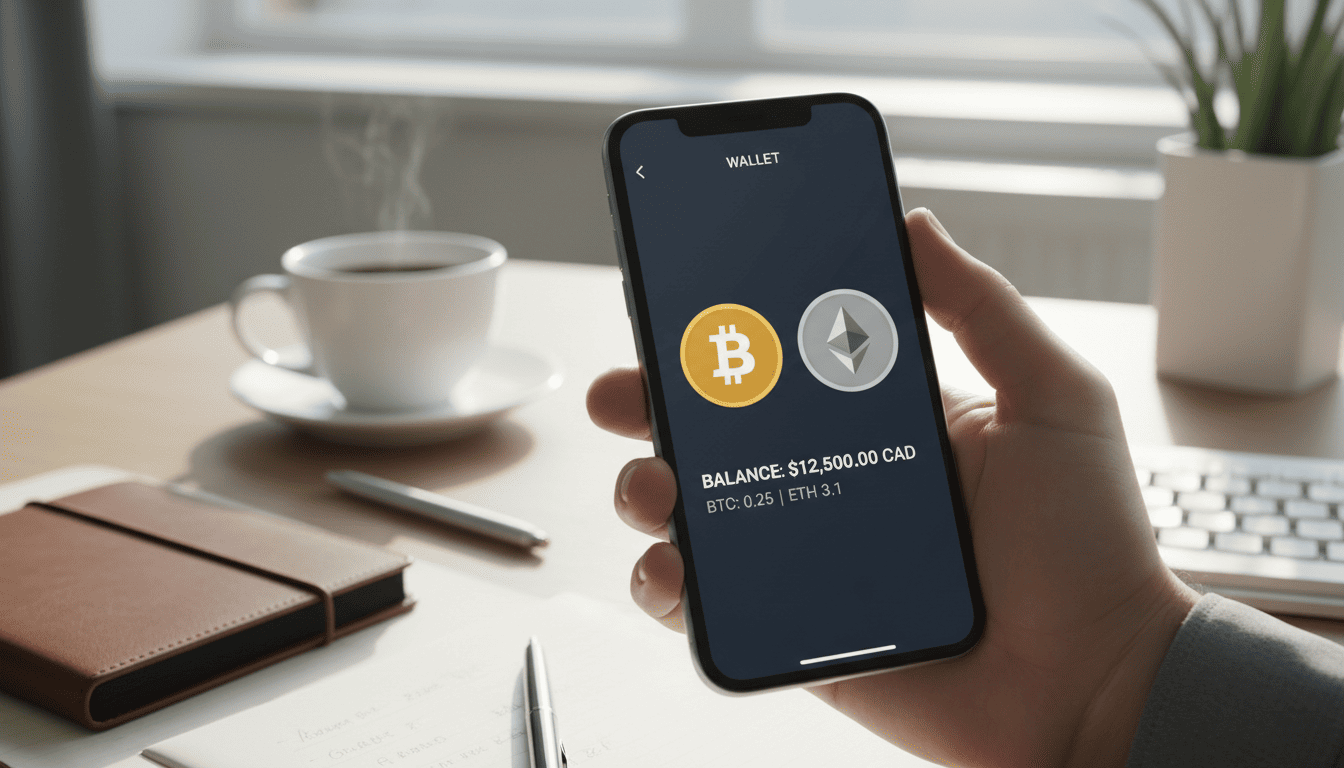
Hot Wallets in Canada: Best for Convenience and Everyday Crypto Use
What is a hot wallet?
A hot wallet Canada beginners use is connected to the internet through a mobile app, desktop app or browser extension. It is the most accessible form of self-custody because setup is fast and daily use is simple.
Common examples include MetaMask, Trust Wallet, Coinbase Wallet, Exodus and Rabby. These names are helpful reference points, but they should not be treated as a final ranking without comparing supported assets, networks, fees, usability, security tools and backup options.
When a hot wallet makes sense
A hot wallet is often the most practical crypto wallet for beginners Canada users can start with when they want hands-on experience. It is especially useful for:
- Small crypto balances.
- Learning how crypto transfers work.
- DeFi apps.
- NFT marketplaces.
- Token swaps.
- Fast transfers between exchanges and wallets.
- Testing new networks with small amounts.
Hot wallets are also common for Ethereum-based activity because DeFi apps and NFT marketplaces usually require frequent wallet connections. An Ethereum wallet Canada users connect to websites regularly should be treated as an active-use wallet, not a vault for every asset owned.
Hot wallet risks
The main downside is online exposure. Hot wallets can be targeted through phishing links, fake browser extensions, malware, malicious approvals and seed phrase theft. A user who relies on weak exchange account security can also face SIM swap risk if SMS-based recovery or authentication is involved.
A Bitcoin wallet Canada setup can be compromised if the recovery phrase is stored in screenshots or cloud storage. An Ethereum wallet can also be drained if a user signs a dangerous smart contract approval. For that reason, a hot wallet can be safe enough for small active balances, but it is rarely the safest crypto wallet Canada choice for all long-term holdings.
Cold Storage in Canada: Best for Long-Term Crypto Protection
What is cold storage?
A cold storage wallet Canada users choose keeps private keys offline. For most beginners, this usually means a hardware wallet: a dedicated device designed to sign transactions without exposing private keys directly to an internet-connected phone or computer.
Examples often discussed include Ledger, Trezor and Tangem. These should not be presented as a final ranking unless compared on supported assets, price, usability, backup model, app experience and security design.
A cold wallet Canada setup is not risk-free. You still need to protect the recovery phrase and approve transactions carefully. But keeping private keys offline can significantly reduce exposure to common online attacks.
When cold storage makes sense
Cold storage is usually best when protection matters more than convenience. It is especially useful for:
- Long-term Bitcoin or Ethereum holding.
- Larger balances.
- Users who do not need daily access.
- Investors who want self-custody instead of exchange custody.
- People who prefer a “savings vault” approach.
If your plan is to buy and hold, a hardware wallet Canada users manage carefully is often a stronger fit than keeping everything on an exchange or in a browser wallet.
Cold storage downsides
Cold storage has trade-offs. There is usually an upfront device cost, a setup learning curve and more responsibility around recovery phrase protection. It is less convenient for frequent trading, DeFi activity or token swaps. Mistakes can also be harder to reverse because self-custody removes the safety net of account recovery through a platform.
That is why cold storage is best understood as a vault, not a daily spending account.
Hot Wallet vs Cold Wallet Canada: Main Differences
| Feature | Hot Wallet | Cold Wallet / Cold Storage |
|---|---|---|
| Internet connection | Online or frequently connected | Private keys kept offline |
| Best for | Small balances, DeFi, NFTs, quick transfers | Long-term holding and larger balances |
| Convenience | Very high | Lower |
| Security exposure | Higher phishing and malware risk | Lower online attack exposure |
| Cost | Usually free | Hardware device cost |
| Beginner difficulty | Easy to start | Requires careful setup |
| Recovery risk | Seed phrase still critical | Seed phrase still critical |
| Best Canadian use case | Learning, small active wallet | Long-term BTC/ETH storage |
For most beginners, the answer is not hot wallet or cold wallet. The stronger setup is usually both: a hot wallet for active use and cold storage for long-term protection.
Best Crypto Wallet Canada by Use Case
Best setup for complete beginners
The best starting point for many beginners is simple: use a reputable platform to buy a small amount, then learn with a hot wallet before moving larger balances into cold storage. This approach reduces friction while teaching the basics of wallet addresses, network fees and self-custody.
If you are still choosing where to buy, compare the best crypto platforms in Canada before deciding where those assets should be stored.
Best setup for long-term Bitcoin holders
If your plan is mainly to hold Bitcoin for months or years, cold storage usually comes first. A Bitcoin wallet Canada investors use for long-term holdings should prioritise backup discipline, address verification and recovery phrase protection over convenience.
For this use case, a cold storage wallet Canada setup is often the most practical answer because it keeps private keys offline and separates savings from trading activity.
Best setup for Ethereum, DeFi and NFTs
Ethereum users usually need a hot wallet because DeFi apps, NFT marketplaces and on-chain tools require frequent wallet interaction. That said, keeping only active funds in a hot wallet is the safer habit.
For larger balances, users may consider hardware-wallet signing where supported. The best Ethereum wallet Canada setup is often a combination: a hot wallet for activity and a self custody wallet Canada approach that keeps long-term funds away from constant dApp exposure.
Best setup for active traders
Active traders often keep part of their funds on an exchange because quick execution matters. In that case, an exchange wallet may be practical for trading capital, but it is not ideal for long-term storage.
A sensible habit is to separate trading funds from savings funds. If you compare fees, spreads, account tools and platform models, start with a crypto exchange comparison. Users interested in platform tools can also read the Opulatrix review.
Best setup for stablecoin users
Stablecoins can be held in hot or cold wallets, but storage decisions should account for the network used, transaction fees, frequency of transfers and issuer risk. Someone moving stablecoins often may prefer a hot wallet, while someone holding reserves may prefer cold storage.
Canadian users should also follow crypto regulation Canada 2026 developments. Canada’s stablecoin framework is being developed around issuer registration, 1:1 reserves, redemption policies, governance, risk management and Bank of Canada oversight, with the framework expected to come into force in 2027 after regulatory development from early 2026.
Recommended Beginner Setup in Canada: Exchange + Hot Wallet + Cold Storage
The most practical beginner setup is not about choosing one tool for everything. It is about giving each tool a specific job.
- Use a Canadian-authorized or properly registered platform to buy crypto.
- Keep only trading funds on the exchange.
- Move a small amount to a hot wallet for learning and active use.
- Move long-term holdings to cold storage.
- Record transfers, wallet addresses, dates, CAD values and transaction purposes.
- Test every new wallet address with a small transaction first.
This setup works because it mirrors real-world behaviour. Exchanges are useful for market access. Hot wallets are useful for activity. Cold wallets are useful for storage. If you are still comparing providers, visit the best crypto platforms in Canada category and the broader crypto guides library.
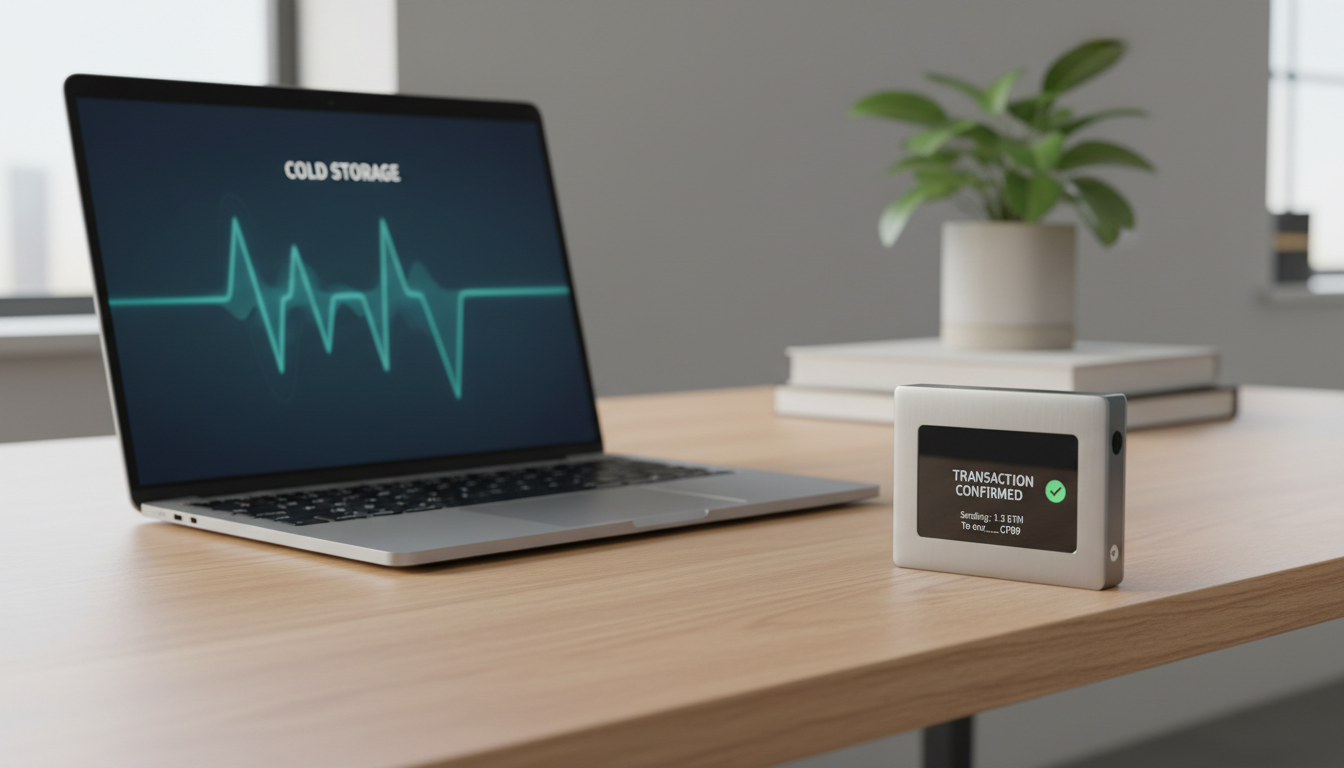
How to Set Up a Hot Wallet Safely
Step 1 — Download only from the official source
Use the official wallet website or a verified app store listing. Avoid paid ads, copied social media links and direct messages offering wallet downloads. Fake apps and browser extensions remain one of the easiest ways to steal funds.
Step 2 — Create a new wallet and write down the recovery phrase
When the wallet generates a recovery phrase, write it down and store it offline. Do not take screenshots. Do not email it to yourself. Do not save it in Google Drive, iCloud, Dropbox, Telegram, WhatsApp or another online account. Digital backups are convenient, but they create obvious theft paths.
Step 3 — Add app-level protection
Use a strong password, device lock and biometrics where available. These protections do not replace recovery phrase security, but they add useful protection if your phone or laptop is lost.
Step 4 — Send a small test transaction
Before moving a meaningful balance, send a small amount first. This matters on networks such as Ethereum, Bitcoin, Polygon, Solana and other chains where address formats, network selection or memo requirements may differ.
Step 5 — Be careful with dApp approvals
Approving a wallet transaction is not the same as simply logging in. Some approvals can grant spending permissions or smart contract access. Read requests carefully and revoke old approvals you no longer need. Strong crypto wallet security Canada habits often come down to slowing down before clicking confirm.
How to Set Up Cold Storage Safely
Step 1 — Buy from the official manufacturer or authorized seller
Do not buy a hardware wallet second-hand or from a random marketplace seller. Supply-chain tampering is a real concern. If you want the benefits of a hardware wallet Canada users trust, start with a clean purchase source.
Step 2 — Initialize the device yourself
A new hardware wallet should be set up by you from scratch. Never use a device that arrives with a pre-written recovery phrase or appears already configured. That is a major warning sign.
Step 3 — Store the recovery phrase offline
Paper backups are common, while some users prefer metal backups for durability. Separate physical locations can reduce single-point-of-failure risk. Safe deposit boxes may be considered, but access, privacy and inheritance trade-offs should be reviewed carefully.
Step 4 — Confirm the address on the device screen
Always confirm the destination address on the hardware wallet’s own screen before approving a transfer. This helps protect against clipboard malware and address replacement attacks on a computer or phone.
Step 5 — Send a test transaction before moving the full balance
Even with cold storage, test first. Send a small amount, confirm it arrives, then transfer the larger balance only after you are confident the address, network and wallet setup are correct.
Crypto Wallet Security Checklist for Canadians in 2026
- Keep recovery phrases offline.
- Use a password manager for exchange accounts.
- Enable 2FA with an authenticator app or hardware security key.
- Avoid SMS-only security where possible.
- Bookmark official wallet and exchange URLs.
- Never share your seed phrase with “support.”
- Revoke old smart contract approvals.
- Use a test transaction before large transfers.
- Check network compatibility before sending assets.
- Keep firmware and wallet apps updated.
- Export exchange records regularly.
- Keep a private inheritance or access plan for trusted family members or executors.
No wallet is 100% safe. The safest crypto wallet Canada setup is usually the one that matches your behaviour, limits unnecessary exposure and protects the recovery phrase properly.
Crypto Wallets and Taxes in Canada
Why wallet records matter
Wallet choice and tax reporting are separate issues, but they connect quickly. The CRA says crypto-asset activities often have tax implications, and users must report business income or losses or capital gains or losses depending on the activity.
The CRA also says users should keep adequate books and records for crypto-asset transactions, including the number and type of units, date and time, value in Canadian dollars, transaction description, wallet addresses, and beginning and ending wallet balances for each crypto-asset each year.
For that reason, a good crypto wallet Canada setup should also support clean record-keeping. CRA resources on Understanding crypto-assets and tax obligations, Reporting income from crypto-asset transactions and Keeping books and records of crypto-assets are useful starting points.
Which wallet actions can create tax issues?
Not every wallet action creates a taxable event, but many crypto activities can have reporting consequences. Examples include:
- Selling crypto.
- Trading one crypto for another.
- Using crypto to buy goods or services.
- Gifting or donating crypto.
- Earning staking, mining or reward income.
- DeFi activity where ownership or rights change.
The CRA says dispositions can include trading or exchanging crypto for fiat or another crypto-asset, using crypto to buy goods or services, or transferring ownership by gift or donation.
Are transfers between your own wallets taxable in Canada?
The CRA states that some transactions do not result in a taxable disposition, including transfers of crypto-assets between wallets that you own. So the common crypto tax Canada wallet transfer question has a practical answer: moving crypto between your own wallets is generally not itself a taxable disposition.
You should still keep records. Wallet addresses, timestamps, balances and transfer logs may be needed later to support tax calculations or show that transfers were between wallets you controlled.
Crypto Wallets, Regulation and Stablecoins in Canada
Wallets vs regulated platforms
Personal wallets and crypto trading platforms are not the same thing. A self-custody wallet gives you direct control over private keys. A platform is where you may buy, sell or trade crypto, and it may provide custodial account services.
When using a platform in Canada, users should check whether it is authorized or registered for Canadians. The CSA maintains information on Crypto Platforms Authorized to Do Business with Canadians and encourages investors to consult relevant lists before buying or selling crypto assets. The best crypto platforms in Canada category can also help beginners compare options before deciding where to buy.
Why custody rules matter in 2026
Custody is a major regulatory theme in Canada. CIRO published its Digital Asset Custody Framework on February 3, 2026, setting expectations for Dealer Members operating Crypto-Asset Trading Platforms in Canada.
This matters because exchange custody, third-party custodians, asset segregation and self-custody are different models with different responsibilities. A regulated platform may follow custody expectations, but that still does not make an exchange account the same as a non-custodial wallet where you control the keys directly.
Stablecoins and wallets
Stablecoins may be held in hot or cold wallets, but users should understand issuer risk, network risk, redemption risk and changing Canadian rules. Canada’s stablecoin framework is being developed around consumer protection, issuer registration, 1:1 reserves, redemption policies, governance, risk management and Bank of Canada oversight.
The framework is expected to come into force in 2027 after regulatory development from early 2026. For policy background, readers can review the Department of Finance Canada material on the Stablecoin Framework and follow broader cryptocurrency news.
Common Beginner Mistakes to Avoid
Mistake 1: Leaving all crypto on an exchange
Exchange accounts are convenient, but keeping everything on-platform concentrates custody risk in one place. Consider separating trading funds from long-term holdings.
Mistake 2: Saving the recovery phrase digitally
Screenshots, cloud storage, email drafts and messaging apps make seed phrase theft easier. Recovery phrases should be stored offline.
Mistake 3: Sending crypto on the wrong network
A token can be sent to the right address but on the wrong chain, which can create serious recovery problems. Always check the asset and network before sending.
Mistake 4: Skipping test transactions
Test transactions are especially important for larger transfers. A small test can catch address, network or setup mistakes before meaningful funds are moved.
Mistake 5: Signing wallet approvals too quickly
Wallet drainers and malicious approvals often rely on users clicking confirm without reading the request. Treat approvals as financial permissions, not casual logins.
Mistake 6: Buying hardware wallets from random sellers
Second-hand devices and marketplace listings can introduce supply-chain risk. Buy from the manufacturer or an authorized seller whenever possible.
Mistake 7: Ignoring tax records
Poor records make CRA reporting harder later. Keep wallet addresses, transaction histories, CAD values and transfer notes from the beginning.
Best Crypto Wallet Canada FAQ
What is the best crypto wallet in Canada for beginners?
The best crypto wallet in Canada depends on how you plan to use crypto. A hot wallet is easier for small balances and daily activity, while cold storage is usually better for long-term holdings. Many beginners use both.
Are crypto wallets legal in Canada?
Yes, Canadians can use crypto wallets. The more important question is whether the platform used to buy, sell or trade crypto is properly authorized or registered.
Is a hot wallet safe enough?
A hot wallet can be safe for small amounts and active use, but it is more exposed to online risks than cold storage. Good setup, careful approvals and offline seed phrase storage matter.
Is cold storage worth it for beginners?
Cold storage is worth considering once your crypto balance becomes meaningful or you plan to hold for months or years instead of trading frequently.
Is an exchange wallet the same as a crypto wallet?
Not exactly. An exchange wallet is usually custodial, meaning the platform controls the private keys. A non-custodial wallet gives the user direct control.
Do wallet transfers trigger tax in Canada?
Transfers between wallets you own do not result in a taxable disposition according to the CRA, but records should still be kept.
Can I hold stablecoins in a crypto wallet in Canada?
Yes. Users should understand the stablecoin issuer, network, redemption risk and evolving Canadian stablecoin rules before deciding how to store them.
What happens if I lose my recovery phrase?
If the wallet cannot be accessed and the recovery phrase is lost, the funds may be unrecoverable.
Do I need a wallet if I buy a Bitcoin ETF in Canada?
No private crypto wallet is needed for an ETF because the investor owns units of the fund, not the underlying Bitcoin directly.
The Best Crypto Wallet Canada Setup Is Usually a Mix
The best crypto wallet Canada beginners choose is usually a practical system, not one product. Use an exchange for buying, selling or active trading funds. Use a hot wallet for small active amounts, DeFi, NFTs and learning. Use cold storage for long-term holdings and larger balances.
Keep recovery phrases offline, maintain records for Canadian tax reporting, and test every new wallet address before moving larger amounts. Before choosing a wallet, compare how you plan to use crypto: daily access, long-term holding, DeFi, stablecoins or active trading. The right wallet is the one that matches your risk level and habits.
Related reading: Best Crypto Wallets for Beginners in Singapore: Hot vs Cold.


